Introduction
Diagnosing acute myocardial infarction (AMI) in patients with left bundle branch block (LBBB) presents significant challenges that complicate clinical decision-making. The Sgarbosa criteria provide a structured approach aimed at enhancing diagnostic accuracy in these complex scenarios. However, implementing these criteria often faces considerable obstacles.
How can healthcare professionals effectively navigate the intricacies of ECG interpretation while ensuring timely and accurate patient care? This article explores the multifaceted challenges of applying the Sgarbosa criteria and discusses innovative solutions to optimize their integration into clinical practice.
Understanding Sgarbosa Criteria in ECG Analysis
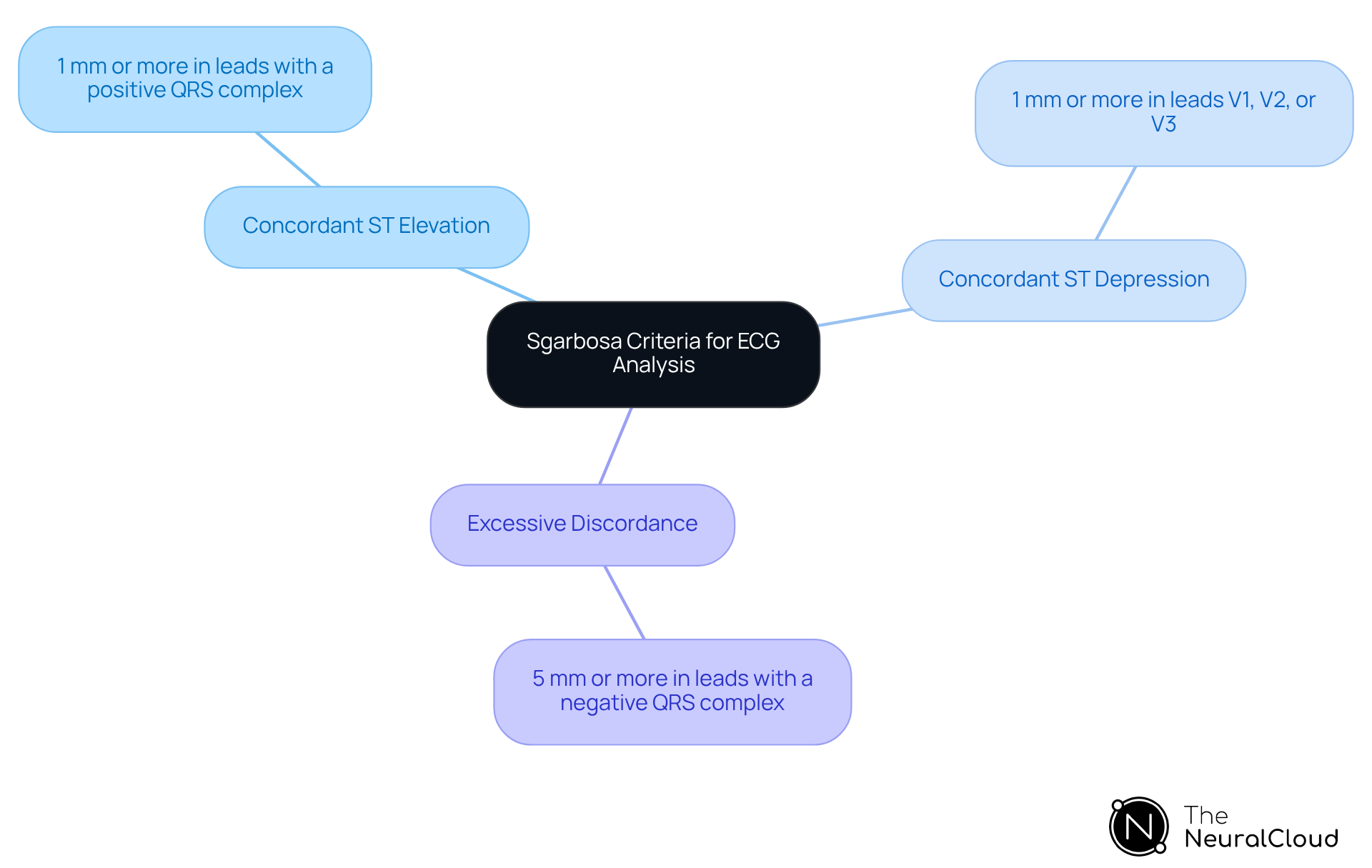
Diagnosing acute myocardial infarction (AMI) in patients with left bundle branch block (LBBB) presents unique challenges. To aid clinicians, specific guidelines have been established that incorporate the Sgarbosa criteria, which include three key aspects:
- Concordant ST elevation of 1 mm or more in leads with a positive QRS complex
- Concordant ST depression of 1 mm or more in leads V1, V2, or V3
- Excessive discordance, defined as ST elevation of 5 mm or more in leads with a negative QRS complex
The Sgarbosa criteria are crucial for enhancing diagnostic accuracy, especially in cases where traditional ST-segment elevation criteria may not be reliable due to the presence of LBBB. By understanding these guidelines, clinicians can make more informed decisions in acute care settings, ultimately improving patient outcomes.
Incorporating these diagnostic criteria into practice not only streamlines the decision-making process but also empowers clinicians to act swiftly and effectively. This clarity in diagnosis is essential for timely intervention, which can significantly impact patient care.
Identifying Challenges in Implementing Sgarbosa Criteria
The application of specified guidelines faces significant challenges that can hinder their effectiveness in clinical practice. One major issue is the variability in interpretation among clinicians, which often leads to inconsistent application of the criteria. This inconsistency can result in misdiagnosis or delayed treatment, especially in cases of acute myocardial infarction. Additionally, the complexity of ECG readings in patients with multiple comorbidities can obscure critical findings, complicating accurate assessments.
Another factor contributing to these challenges is the limited training and knowledge of the criteria among healthcare providers, particularly in high-pressure emergency situations. Statistics reveal that the initial understanding is low, while posttraining assessments improve to 67%. This highlights the urgent need for enhanced training methods. Furthermore, time constraints can further obscure true readings, making it difficult to accurately assess patients.
The platform with its advanced features can enhance ECG analysis. By leveraging these features, healthcare professionals can enhance decision-making and ensure timely interventions for patients experiencing acute myocardial infarction. The platform not only improves ECG analysis but also provides significant benefits, such as reducing the risk of misdiagnosis and expediting treatment decisions.
In summary, the MaxYield™ platform offers a comprehensive solution to the challenges faced in ECG analysis, ultimately leading to better patient outcomes.
Strategic Solutions for Integrating Sgarbosa Criteria
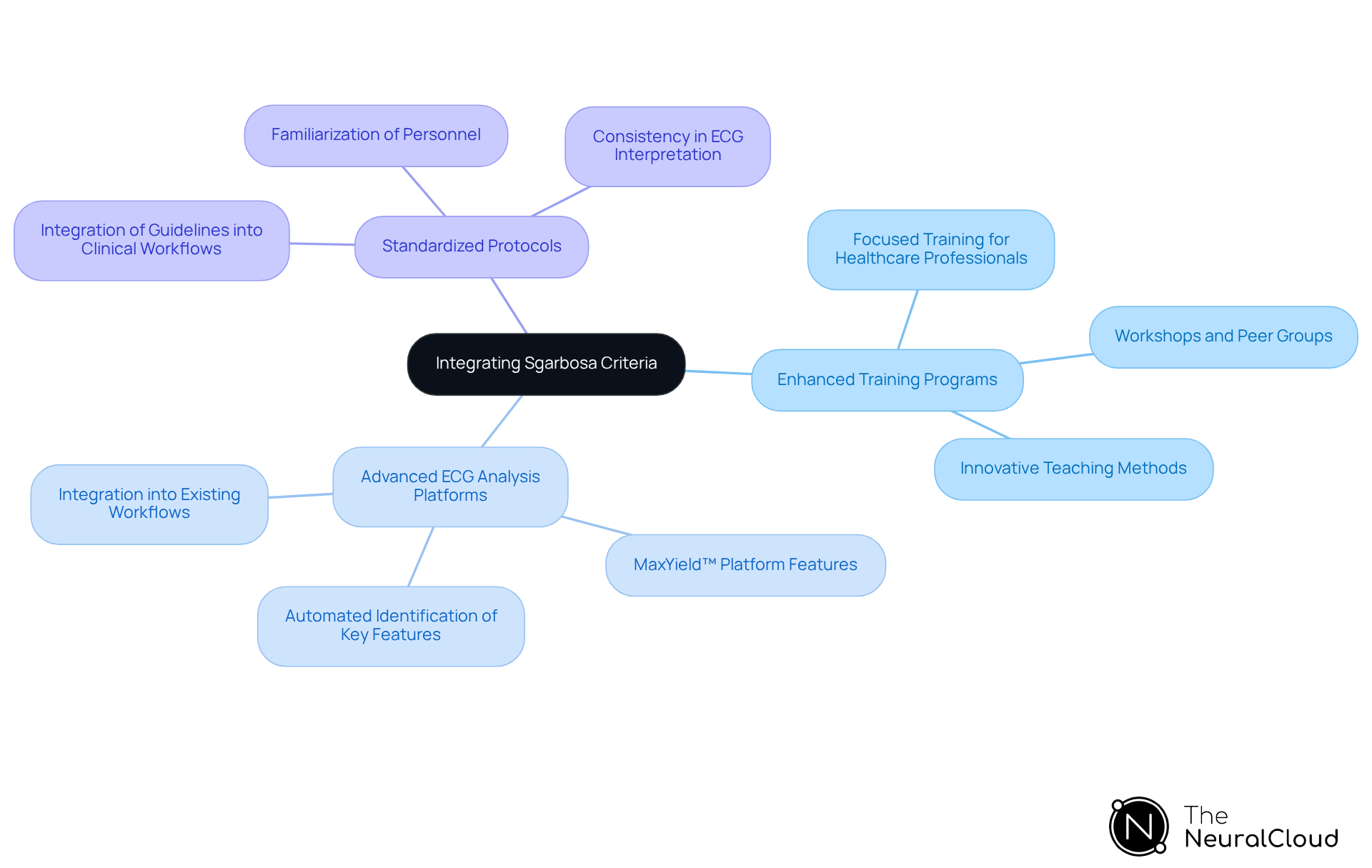
To effectively incorporate the guidelines into clinical practice, several strategic solutions can be implemented:
- Training on ECG interpretation and the application of the guidelines is essential. Studies show that performance rates vary from 4% to 95%, indicating significant performance gaps even among experienced practitioners.
- The software from Neural Cloud Solutions rapidly labels P, QRS, and T Wave onsets, offsets, and time-series intervals. It processes over 200,000 heartbeats in under five minutes, significantly reducing the cognitive load on clinicians. This allows healthcare professionals to concentrate on high-level decision-making and derive actionable insights through data analysis. The data is conveniently provided in CSV format for seamless integration into existing workflows.
- Creating protocols that integrate specific guidelines into regular clinical workflows ensures that all relevant personnel are familiar with their use.
By adopting these strategies, healthcare facilities can enhance diagnostic accuracy and patient outcomes, especially considering that cardiac events occur every 40 seconds in the United States.
Evaluating Results and Impact on Clinical Workflows
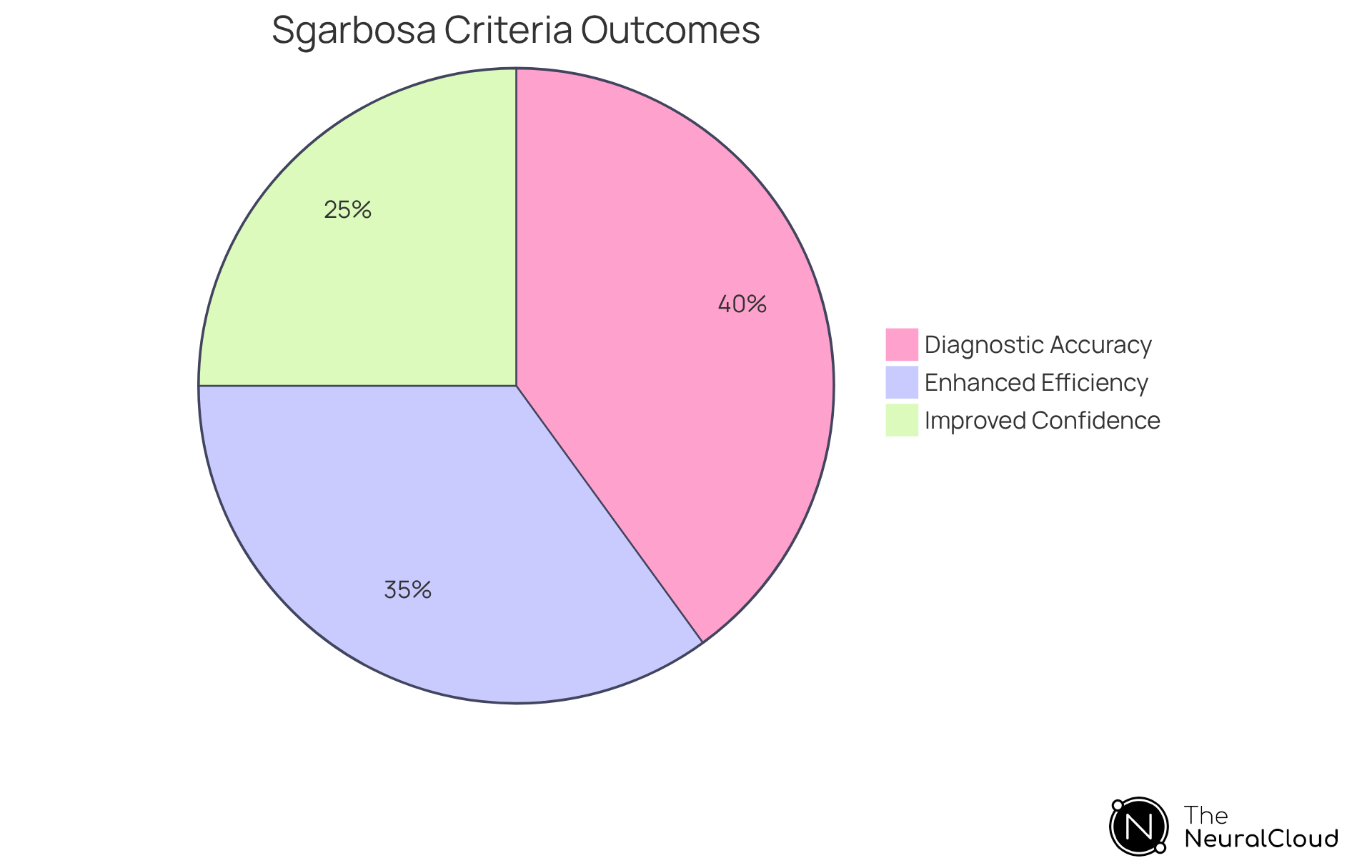
The integration of the Sgarbosa Criteria into clinical workflows addresses significant challenges in ECG analysis. This protocol has led to several favorable outcomes:
- Increased Diagnostic Accuracy: It enhances the identification of acute myocardial infarction (AMI) in patients with left bundle branch block (LBBB), resulting in fewer misdiagnoses and unnecessary interventions.
- Enhanced Efficiency: Clinicians have reported a reduction in interpretation time, streamlining the interpretation process.
- Improved Confidence: Healthcare providers feel more assured in making critical management decisions, which is crucial in emergency settings.
For example, facilities that have adopted the Sgarbosa Criteria have seen a significant reduction in processing times for ECG data. This efficiency allows for quicker decision-making during emergencies. These outcomes underscore the importance of effectively implementing the Sgarbosa Criteria and highlight how technology can improve patient care.
Insights and Lessons Learned from the Implementation
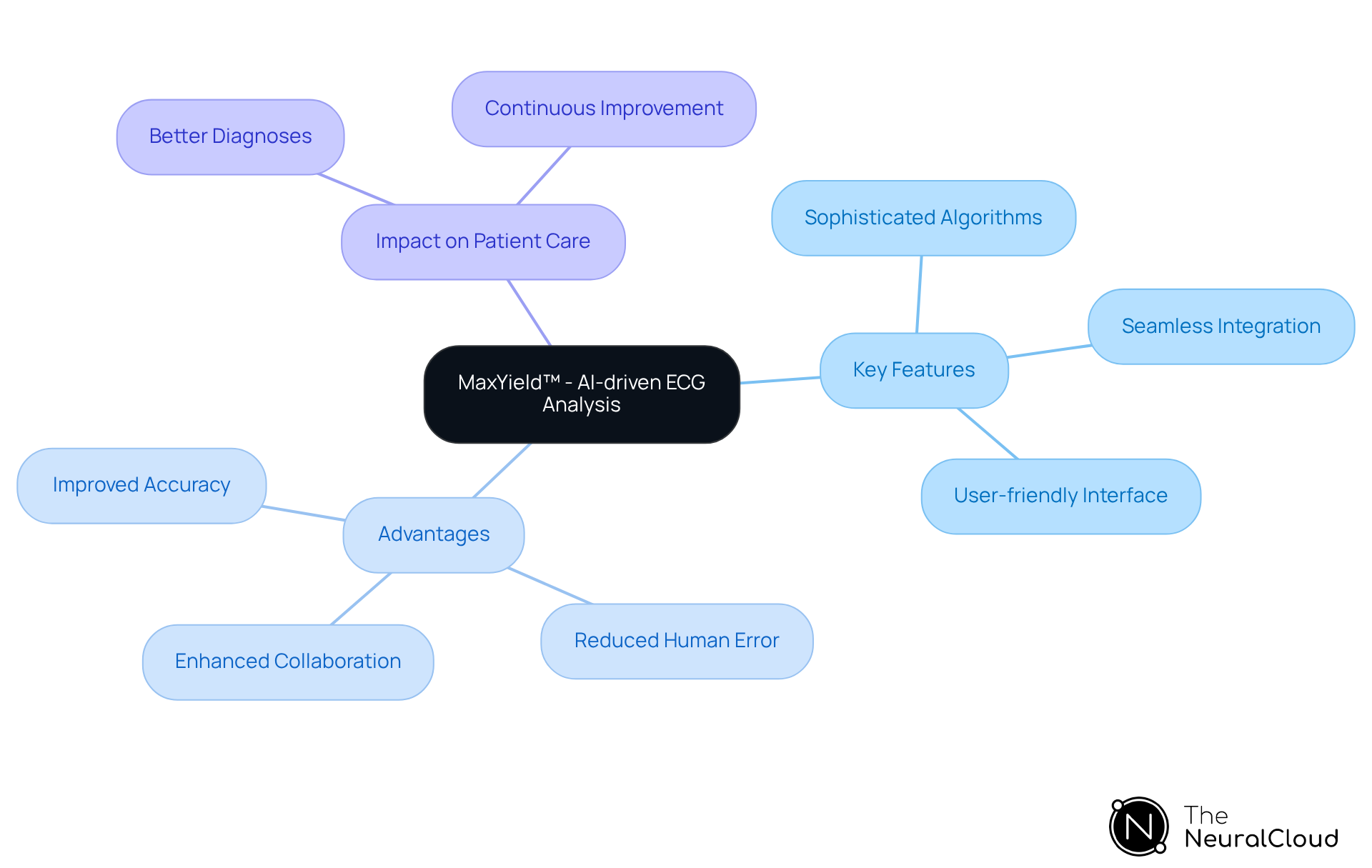
The challenges in ECG analysis are significant, often leading to misdiagnoses and delayed patient care. To address these issues, the implementation of advanced technologies is crucial. One such innovation is Neural Cloud Solutions' MaxYield™, an application designed to enhance diagnostic capabilities.
MaxYield™ offers several key features that set it apart in the field of ECG analysis:
- It utilizes sophisticated algorithms to analyze ECG data with remarkable accuracy.
- The platform integrates seamlessly with existing healthcare systems, allowing for easy adoption by healthcare professionals.
- Its user-friendly interface ensures that both technical and non-technical users can navigate the platform effectively.
The advantages of using MaxYield™ are substantial. By utilizing this technology, healthcare professionals can reduce the likelihood of human error, leading to more reliable diagnoses. Additionally, the platform fosters collaboration among healthcare teams, enabling knowledge sharing that ultimately enhances patient outcomes. With MaxYield™, the potential for improved patient care is immense, paving the way for better patient care and continuous improvement in clinical practices.
Conclusion
The Sgarbosa criteria play a crucial role in diagnosing acute myocardial infarction (AMI) in patients with left bundle branch block (LBBB). These guidelines provide a structured approach to ECG interpretation, which enhances clinical decision-making and ultimately improves patient outcomes. For healthcare professionals, especially in high-pressure environments, understanding and implementing these criteria is essential, as timely interventions can be life-saving.
However, applying the Sgarbosa criteria comes with challenges. Variability in ECG interpretation, limited training, and the complexities of concurrent medical conditions can hinder effective use. Advanced tools like the MaxYield™ platform can address these issues. This platform streamlines ECG analysis, reduces cognitive load, and enhances diagnostic accuracy, making it a valuable asset in clinical settings.
Features of the MaxYield™ Platform:
- Streamlined ECG analysis
- Reduced cognitive load for healthcare professionals
- Enhanced diagnostic accuracy
By adopting strategic solutions such as improved training programs and standardized protocols, healthcare facilities can overcome barriers to effective ECG interpretation. The integration of the Sgarbosa criteria into clinical workflows is not merely about improving diagnostic accuracy; it transforms the approach to patient care in emergency settings. Given the frequency of myocardial infarction, embracing these guidelines and leveraging technology can lead to significant advancements in clinical practice.
The call to action is clear: prioritize the implementation of the Sgarbosa criteria and invest in training and technological solutions. This ensures that healthcare professionals are equipped to make swift and accurate decisions for their patients.
Frequently Asked Questions
What are the Sgarbosa criteria used for?
The Sgarbosa criteria are used to diagnose acute myocardial infarction (AMI) in patients with left bundle branch block (LBBB), providing specific guidelines to enhance diagnostic accuracy.
What are the three key aspects of the Sgarbosa criteria?
The three key aspects of the Sgarbosa criteria include: 1. Concordant ST elevation of 1 mm or more in leads with a positive QRS complex. 2. Concordant ST depression of 1 mm or more in leads V1, V2, or V3. 3. Excessive discordance, defined as ST elevation of 5 mm or more in leads with a negative QRS complex.
Why are the Sgarbosa criteria important in clinical practice?
The Sgarbosa criteria are important because they help improve diagnostic accuracy in cases where traditional ST-segment elevation criteria may not be reliable due to LBBB, allowing for more informed decisions and timely interventions in acute care settings.
What challenges exist in implementing the Sgarbosa criteria in clinical practice?
Challenges include variability in ECG interpretation among clinicians, limited training and knowledge of the Sgarbosa criteria, complexity of ECG readings in patients with multiple comorbidities, and artifacts or noise in ECG signals that can obscure true readings.
How does MaxYield™ address the challenges of implementing the Sgarbosa criteria?
MaxYield™ addresses these challenges with advanced noise filtering and wave recognition capabilities, enhancing diagnostic accuracy and expediting treatment decisions for patients experiencing AMI.
What is the impact of training on the accuracy of interpreting the Sgarbosa criteria?
Statistics show that the median accuracy of ECG interpretation pretraining is only 54%, while posttraining assessments improve to 67%, highlighting the need for enhanced training methods among healthcare providers.
List of Sources
- Identifying Challenges in Implementing Sgarbosa Criteria
- Queen of Hearts AI Hits 92% STEMI Accuracy (https://powerfulmedical.com/blog/pmcardio-reports-positive-rct-results-and-late-breaking-clinical-science-for-stemi-detection)
- Report identifies risks in ambulance ECG interpretation and timely STEMI diagnosis — HSSIB (https://hssib.org.uk/news-events-blog/report-identifies-risks-in-ambulance-ecg-interpretation-and-timely-stemi-diagnosis)
- Accuracy of Physicians’ Electrocardiogram Interpretation (https://jamanetwork.com/journals/jamainternalmedicine/fullarticle/2771093)
- AI-based ECG model linked to reduction in false positives for heart attack (https://healio.com/news/cardiology/20251030/aibased-ecg-model-linked-to-reduction-in-false-positives-for-heart-attack)
- Checking your browser - reCAPTCHA (https://pmc.ncbi.nlm.nih.gov/articles/PMC7522782)
- Strategic Solutions for Integrating Sgarbosa Criteria
- intheloop.mayoclinic.org (https://intheloop.mayoclinic.org/2018/12/11/transforming-ecg-education-is-not-all-fun-and-games-except-when-it-is)
- The Use of Artificial Intelligence in ECG Interpretation in the Outpatient Setting: A Scoping Review (https://cureus.com/articles/405923-the-use-of-artificial-intelligence-in-ecg-interpretation-in-the-outpatient-setting-a-scoping-review)
- powerfulmedical.com (https://powerfulmedical.com/blog/powerful-medical-wins-medtech-innovator-2025)
- Checking your browser - reCAPTCHA (https://pmc.ncbi.nlm.nih.gov/articles/PMC7522782)
- AI-Based ECG Analysis Significantly Improves STEMI Detection, Reduces False Activations - American College of Cardiology (https://acc.org/latest-in-cardiology/articles/2025/10/24/16/56/tues-554pm-ai-tct-2025)