Introduction
Electrical interference in electrocardiograms (ECGs) poses significant challenges to the accuracy of heart monitoring. This interference can lead to misdiagnoses and inappropriate treatments, ultimately affecting patient care. Understanding the various sources of interference-ranging from electromagnetic noise to motion artifacts-is crucial for healthcare professionals. As they strive for precision in cardiac assessments, the question arises: how can these disruptive signals be effectively mitigated to ensure reliable ECG interpretations?
In addressing these challenges, the MaxYield™ platform offers innovative solutions designed to enhance ECG analysis. By minimizing electrical interference, it improves the clarity of heart monitoring data. This not only aids in accurate diagnoses but also supports appropriate treatment decisions, benefiting both healthcare providers and patients alike.
The implications of utilizing the MaxYield™ platform are profound. Healthcare professionals can expect improved clinical outcomes through more reliable ECG interpretations. As the demand for precision in cardiac assessments continues to grow, leveraging advanced technology like MaxYield™ becomes essential in overcoming the hurdles posed by electrical interference.
Define Electrical Interference in ECG Signals
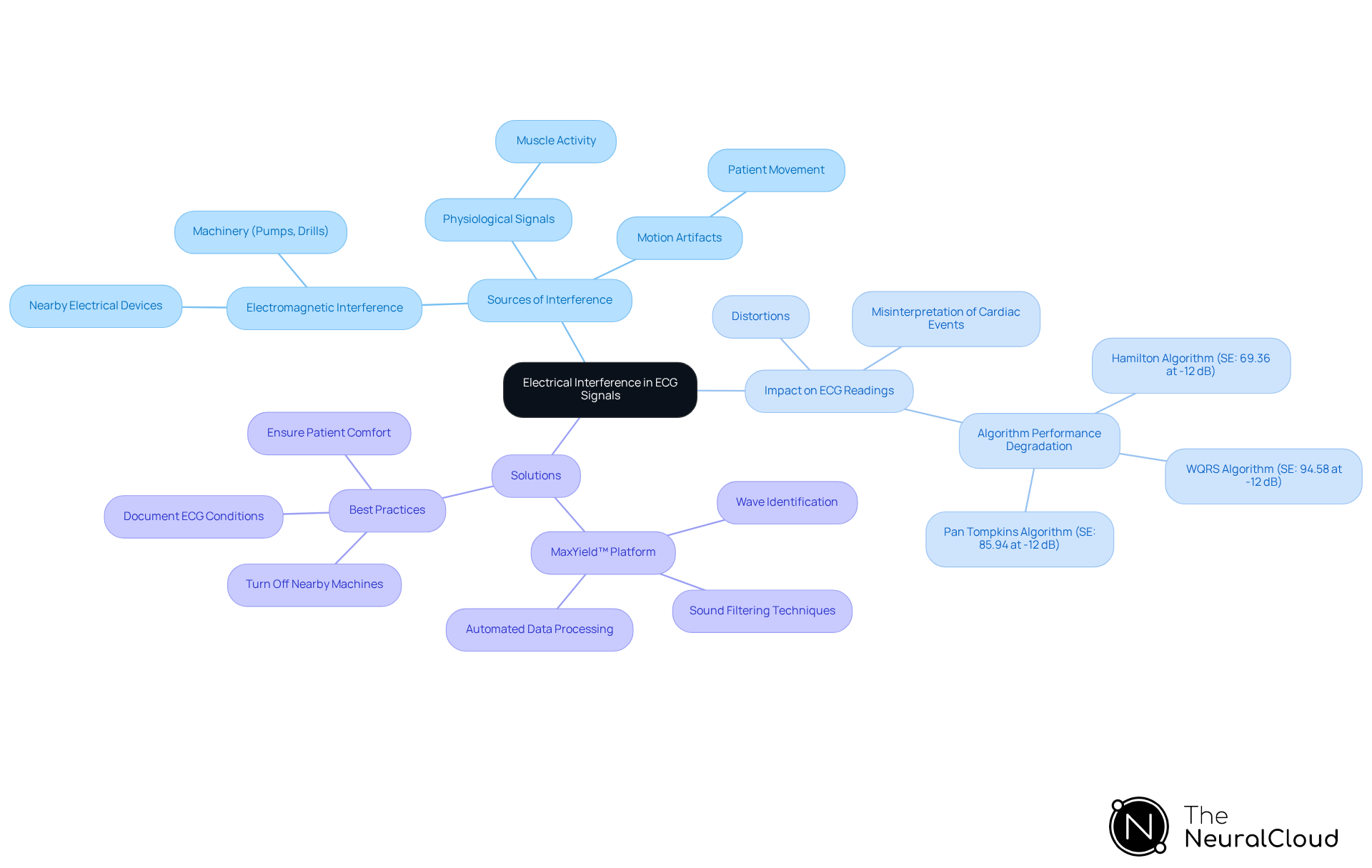
readings refers to any extraneous electrical activity that disrupts the accurate depiction of the heart's electrical patterns. This interference can manifest as distortions or artifacts in the ECG waveform, leading to inaccurate results. Common sources include:
- noise from nearby electrical devices
For instance, equipment like pumps and drills may unintentionally introduce disturbances into the ECG readings.
A study highlighted that the presence of EM artifacts significantly degraded detection performance across various algorithms. Notably, the Hamilton algorithm demonstrated a sensitivity of only 69.36% at a signal-to-noise ratio (SNR) of -12 dB. Understanding electrical interference is crucial for healthcare professionals, as it directly impacts the accuracy of diagnoses and, consequently, patient care.
The technology addresses these challenges by utilizing top-tier techniques in sound filtering and wave identification. It automates repetitive tasks and processes more data in less time, enhancing the efficiency of ECG analysis. This allows healthcare professionals to better manage and mitigate interference.
Recognizing and managing these artifacts can significantly improve diagnostic accuracy, ultimately improving diagnostic outcomes. By leveraging the capabilities of the technology, healthcare providers can ensure more reliable ECG analysis, leading to better patient care.
Identify Sources of Electrical Interference in ECG
Common sources of electrical interference in ECG include:
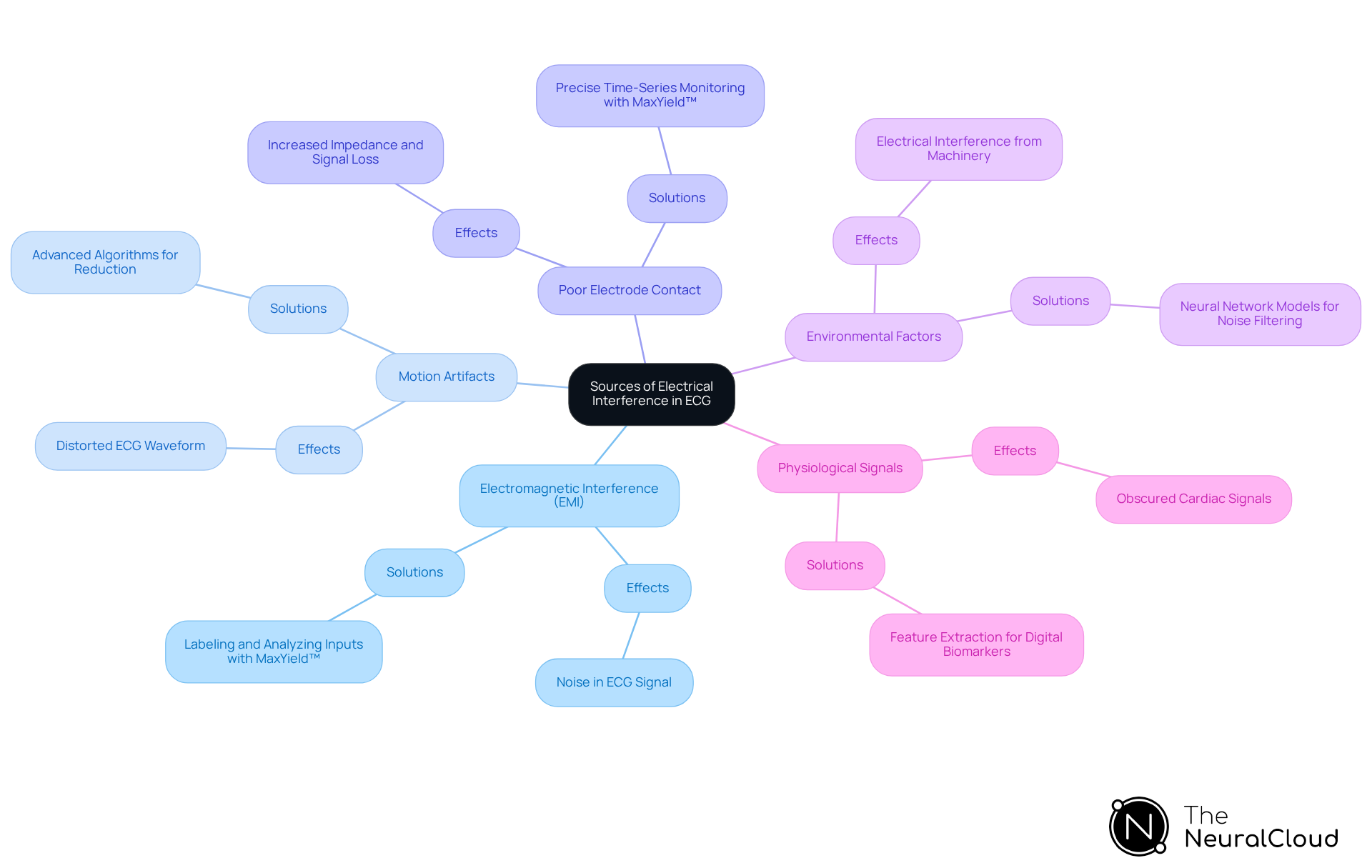
- Electromagnetic Interference: Generated by devices such as mobile phones, computers, and power lines, EMI can introduce noise into the ECG signal. With software tools, users can quickly label and analyze these inputs, ensuring clearer data sets despite the presence of EMI.
- Motion Artifacts: Patient movement, including muscle contractions and breathing, can distort the ECG waveform. Advanced algorithms assist in reducing the effect of these artifacts by offering strong processing capabilities.
- Electrode Issues: Inadequate skin preparation or worn electrodes can lead to increased impedance and signal loss. MaxYield™ facilitates the identification of such issues by delivering precise time-series intervals for better monitoring.
- Environmental Noise: Nearby machinery, such as pumps or drills, can cause interference on ECG readings. Machine learning neural network models analyze these complex inputs, helping to filter out noise and improve clarity.
- Physiological Signals: Electrical activity from skeletal muscles can mimic or obscure cardiac signals, complicating interpretation. By utilizing the platform's capabilities, users can extract key features from the ECG data, aiding in the discovery of new digital biomarkers and enhancing overall diagnostic accuracy.
Analyze the Impact of Interference on ECG Interpretation
Electrical interference poses significant challenges in ECG interpretation, impacting clinical outcomes in several critical ways:
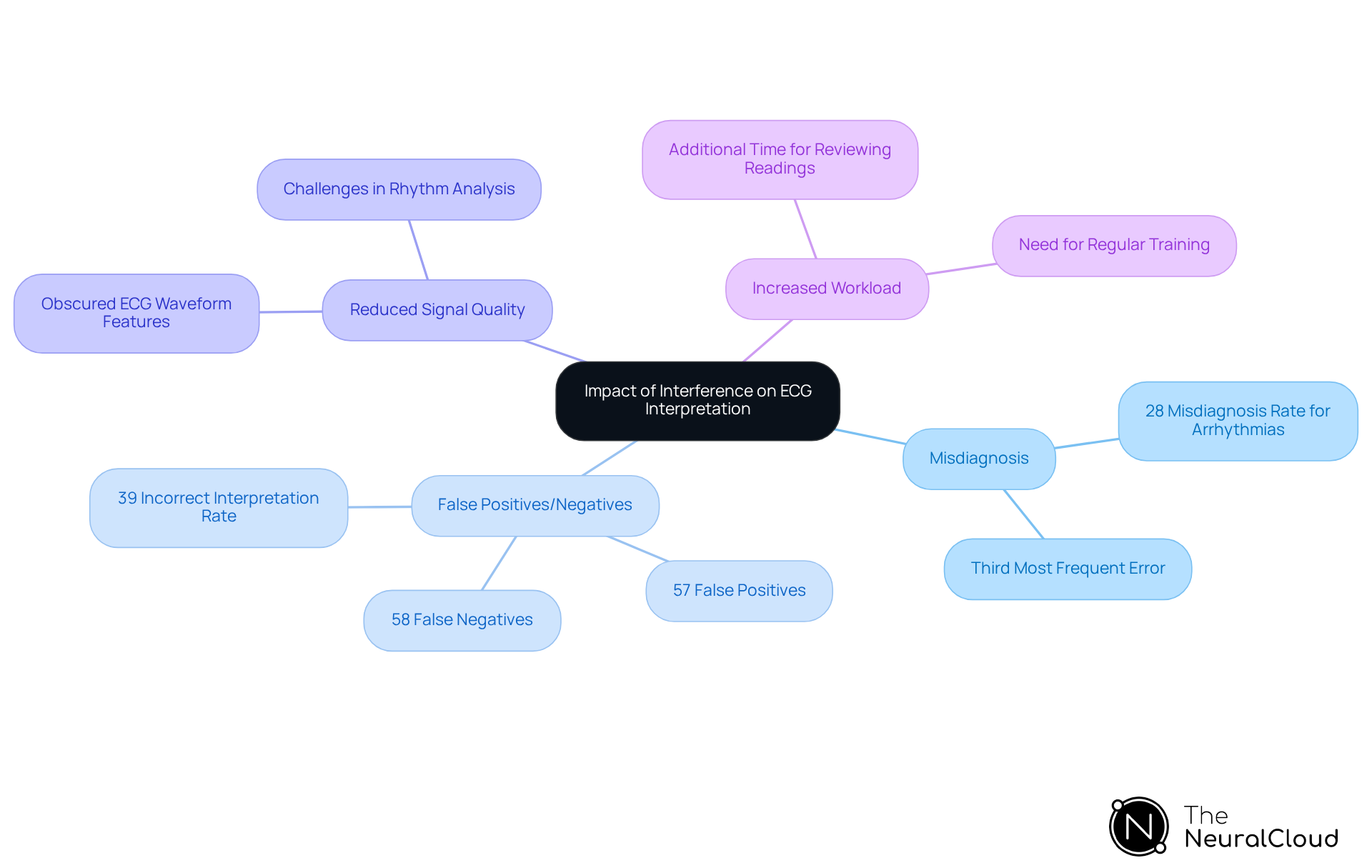
- Misdiagnosis: Artifacts can mimic serious cardiac conditions, leading to incorrect treatment decisions. For instance, the misdiagnosis ranks third in frequency of errors in device ECG interpretation, with a notable 28% misdiagnosis rate for arrhythmias, including 17.1% being failures to diagnose. The technology addresses this challenge through sophisticated sound filtering, which decreases the chances of misinterpretation.
- False Positives/Negatives: Electrical noise can cause algorithms to misidentify arrhythmias or other cardiac events, resulting in unnecessary interventions or missed diagnoses. A study found that approximately 39% of ECGs were interpreted incorrectly, with 57% false positives. This underscores the importance of accuracy, especially in cases of critical conditions, to avoid inappropriate treatments. The MaxYield™ system enhances the accuracy of these interpretations by streamlining workflow and automating repetitive tasks, leading to more reliable results.
- Reduced Signal Quality: Elevated levels of interference can obscure critical features of the ECG waveform, such as P-waves and QRS complexes, making analysis more complicated. For example, alternating current artifacts can darken the ECG baseline, making rhythm analysis more challenging. Muscle twitching, particularly in conditions like Parkinson's disease, can also mimic atrial flutter, necessitating careful electrode placement. With advanced technology, the MaxYield™ system helps maintain signal integrity and minimizes artifacts, ensuring that essential waveform features remain clearly visible.
- Increased Workload: Clinicians may spend additional time reviewing and correcting erroneous readings caused by interference, which detracts from patient care. Regular training and updates for ECG technicians can significantly reduce the incidence of artifacts, thereby improving overall efficiency in clinical settings. By optimizing processes and enhancing workflow efficiency, the MaxYield™ system enables clinicians to focus more on patient care instead of correcting mistakes.
The importance of accuracy cannot be overstated, as reliance solely on automated analysis can lead to misinterpretations that mislead medical staff. Experts emphasize that integrating technology in ECG practices, such as that provided by the MaxYield™ system, is essential for improving diagnostic reliability.
Implement Techniques to Reduce Electrical Interference in ECG
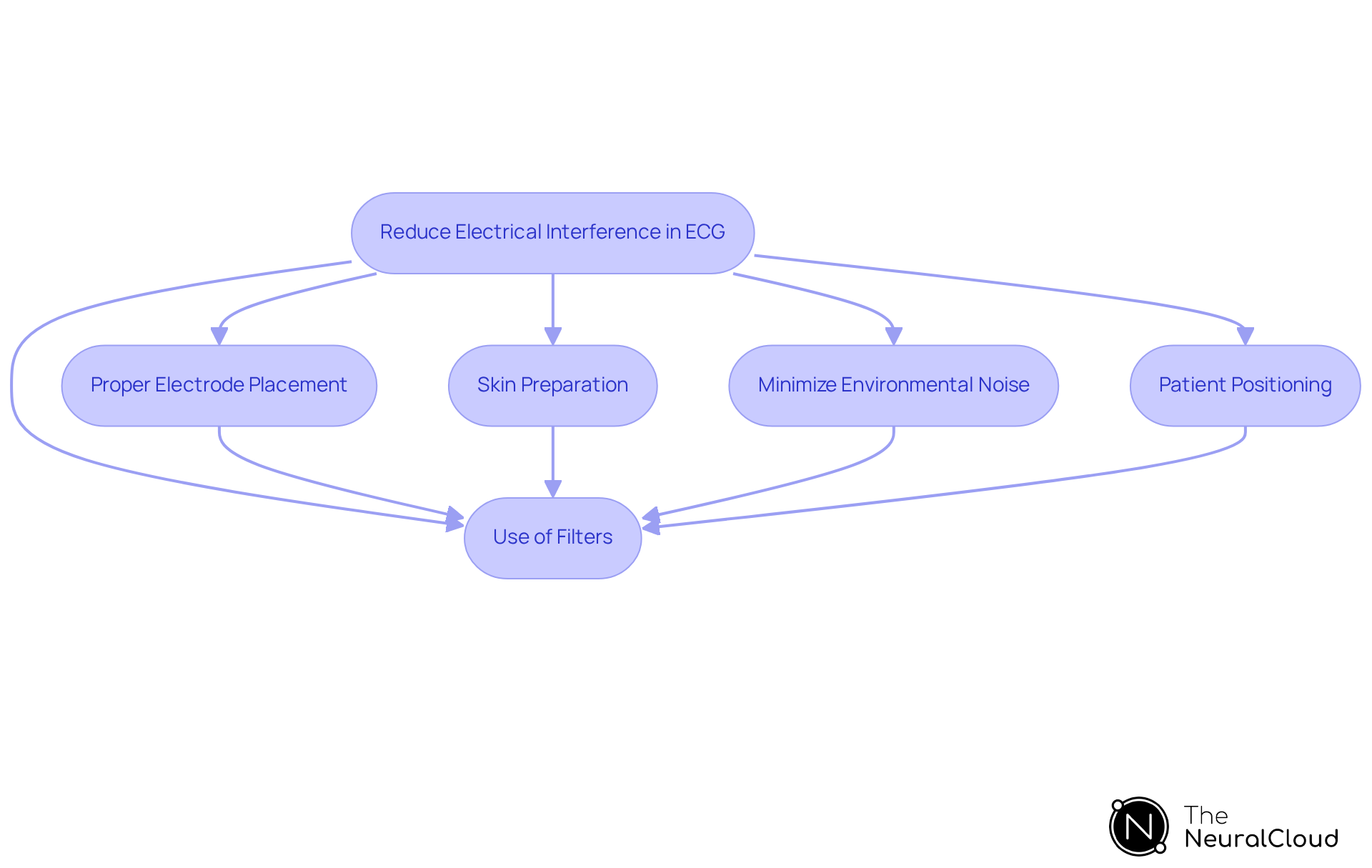
To reduce electrical interference in ECG, consider the following techniques:
- Ensure electrodes are placed correctly and securely on the skin to minimize motion artifacts.
- Skin Preparation: Clean the skin to remove oils and debris, and consider mild abrasion to improve electrode contact.
- Use of Filters: Implement low-pass and notch filters to remove high-frequency disturbances and address noise from the ECG waveform. This solution enhances the process by providing clarity, ensuring a cleaner, 'neuralized' signal and a clear, beat-by-beat data wall.
- Controlled Environment: Conduct ECG tests in a controlled environment, away from potential sources that could cause interference, such as heavy machinery or wireless devices.
- Patient Positioning: Position the patient comfortably to reduce movement during the ECG recording, thereby minimizing motion artifacts. Automation can automate repetitive tasks and process data more efficiently, leading to a more accurate analysis.
Conclusion
Understanding electrical interference in ECG signals is crucial for accurate cardiac assessments. This article has examined various sources of interference, such as electromagnetic interference, motion artifacts, and environmental factors, all of which can significantly distort ECG readings. By recognizing these challenges, healthcare professionals can implement measures to mitigate their impact, ultimately leading to improved patient outcomes.
Key insights discussed include the detrimental effects of misdiagnosis and false interpretations caused by electrical noise. The MaxYield™ platform stands out as a powerful solution, utilizing advanced filtering techniques and automation to enhance the clarity of ECG signals. By addressing issues like poor electrode contact and environmental disturbances, healthcare providers can achieve more reliable readings and lessen the workload associated with correcting erroneous interpretations.
In summary, the importance of understanding and managing electrical interference in ECG cannot be overstated. As the healthcare landscape evolves, integrating technology like MaxYield™ into ECG practices becomes essential for enhancing accuracy and efficiency. By prioritizing continuous education and adopting best practices, clinicians can navigate the complexities of ECG interpretation, ultimately leading to better patient care and more informed clinical decisions.
Frequently Asked Questions
What is electrical interference in ECG signals?
Electrical interference in ECG signals refers to any extraneous electrical activity that disrupts the accurate depiction of the heart's electrical patterns, leading to distortions or artifacts in the ECG waveform.
What are common sources of electrical interference in ECG readings?
Common sources include electromagnetic interference (EMI) from nearby electrical devices, motion artifacts from patient movement, and physiological signals from muscles other than the heart.
How does electrical interference affect ECG readings?
Electrical interference can lead to misinterpretation of cardiac events and degrade the detection performance of various algorithms used in ECG analysis.
What was the sensitivity of the Hamilton algorithm in detecting ECG signals affected by interference?
The Hamilton algorithm demonstrated a sensitivity of only 69.36% at a signal-to-noise ratio (SNR) of -12 dB.
Why is it important for healthcare professionals to understand electrical interference on ECG?
Understanding electrical interference is crucial for healthcare professionals as it directly impacts the accuracy of ECG readings and, consequently, patient care.
How does the MaxYield™ platform address electrical interference in ECG?
The MaxYield™ platform utilizes top-tier techniques in sound filtering and wave identification, automating repetitive tasks and processing more data in less time to enhance the accuracy of ECG readings.
What benefits does managing electrical interference provide in ECG analysis?
Recognizing and managing electrical interference can significantly enhance the ability to accurately assess cardiac conditions, ultimately improving diagnostic outcomes and patient care.
List of Sources
- Define Electrical Interference in ECG Signals
- Analysis of various techniques for ECG signal in healthcare, past, present, and future (https://sciencedirect.com/science/article/pii/S2667099223000191)
- pmc.ncbi.nlm.nih.gov (https://pmc.ncbi.nlm.nih.gov/articles/PMC7357458)
- nottingham.ac.uk (https://nottingham.ac.uk/nursing/practice/resources/cardiology/interferance/electrical.php)
- Guide to Understanding ECG Artifact | ACLS Training Blog (https://aclsmedicaltraining.com/blog/guide-to-understanding-ecg-artifact)
- Analyze the Impact of Interference on ECG Interpretation
- Main artifacts in electrocardiography - PMC (https://pmc.ncbi.nlm.nih.gov/articles/PMC6931710)
- Checking your browser - reCAPTCHA (https://pmc.ncbi.nlm.nih.gov/articles/PMC12137353)
- scribd.com (https://scribd.com/document/862713553/Case-Study1)
- AI-ECG Finds STEMI Faster, Cuts False-Positive Cath Lab Activations (https://tctmd.com/news/ai-ecg-finds-stemi-faster-cuts-false-positive-cath-lab-activations)