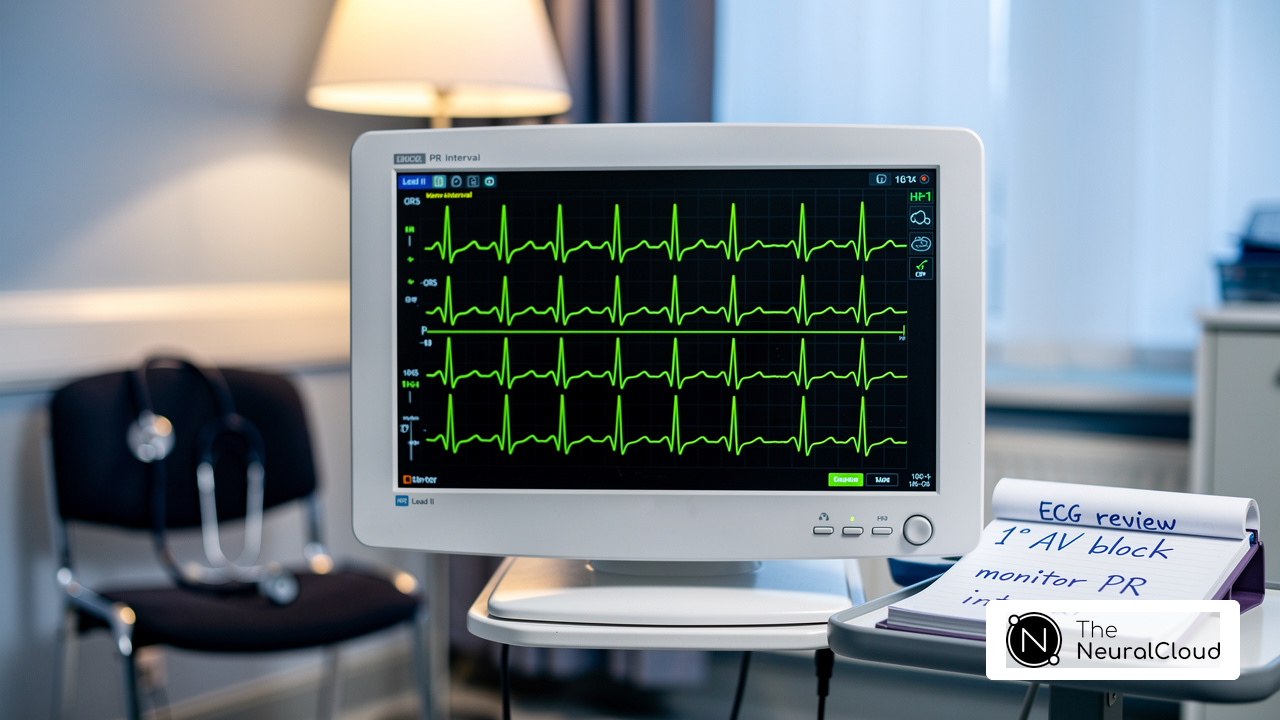
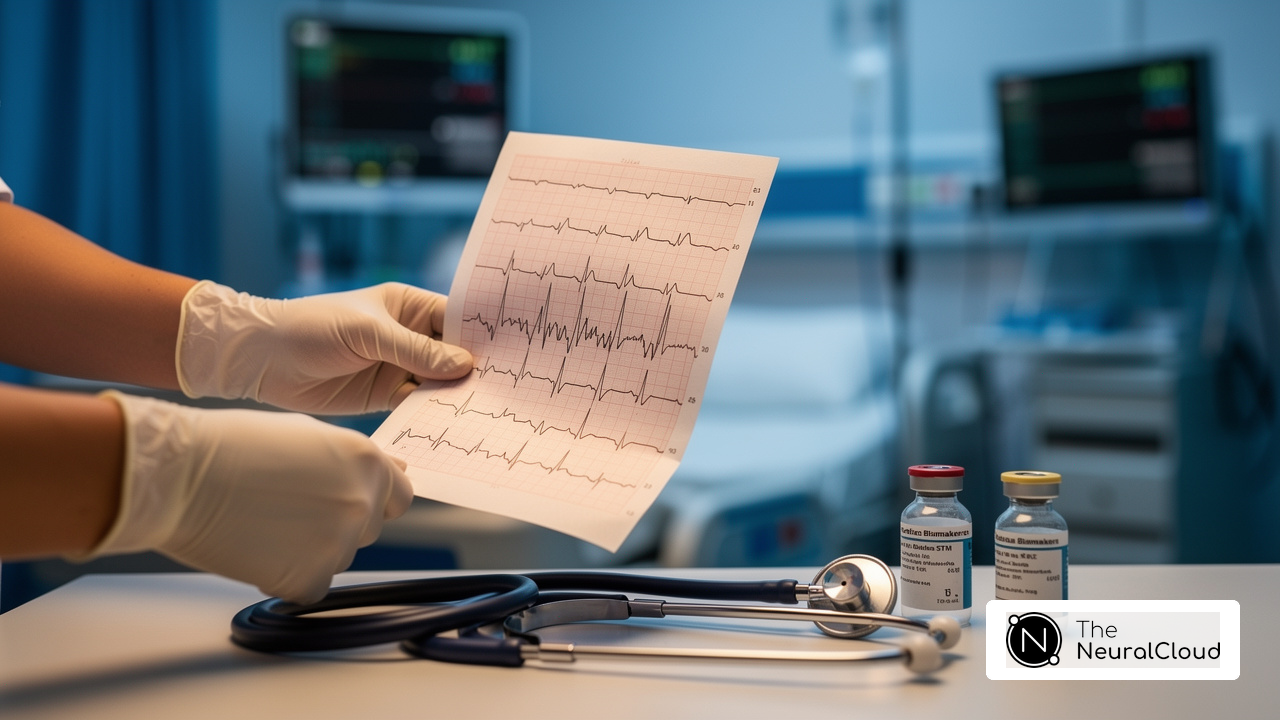
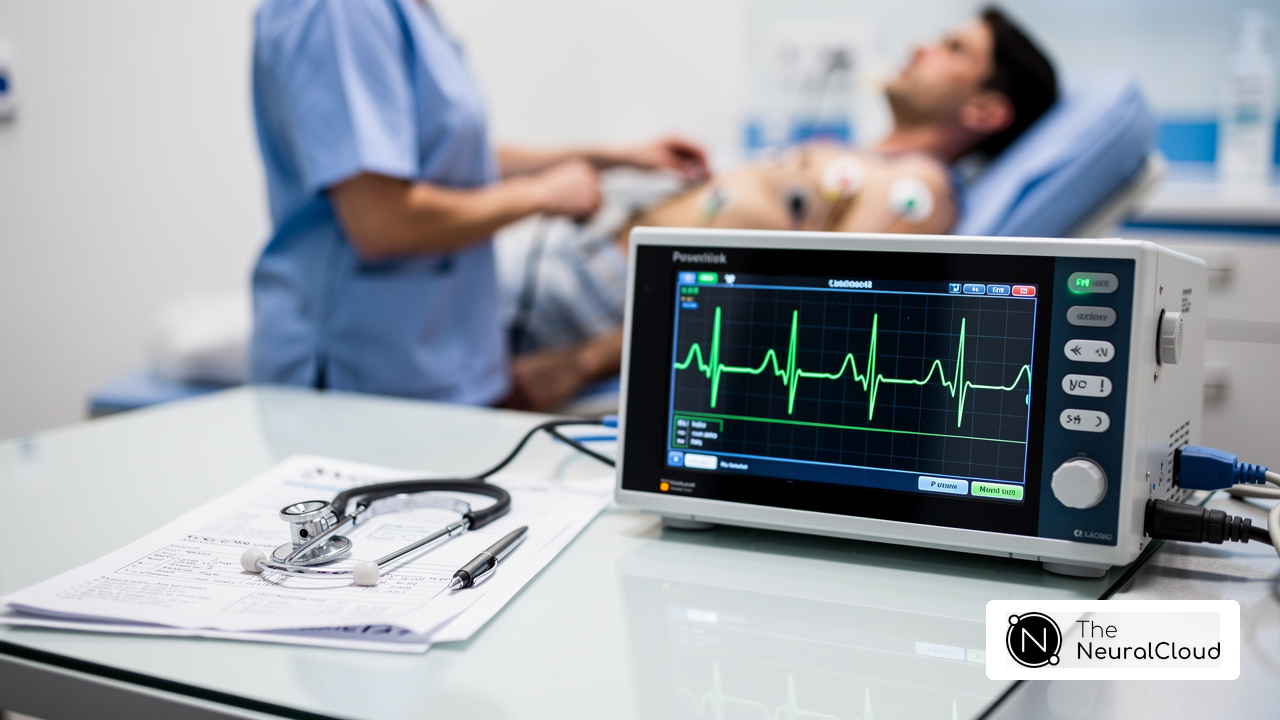
Introduction
Understanding T wave morphology is crucial for health tech developers focused on improving ECG interpretation tools. Accurately distinguishing between normal and peaked T waves significantly affects diagnostic precision and is vital for identifying serious conditions like hyperkalemia and myocardial ischemia. However, given the complexities of cardiac repolarization and the physiological factors influencing T wave appearance, how can developers create algorithms that are both precise and adaptable? This article explores the characteristics of peaked T waves, their clinical importance, and how platforms like MaxYield™ enhance patient outcomes.
ECG analysis presents several challenges, particularly in recognizing T wave abnormalities. Developers must navigate the intricacies of cardiac signals while ensuring their tools remain user-friendly for healthcare professionals. The MaxYield™ platform addresses these challenges by offering advanced features designed to improve ECG analysis.
Features of MaxYield™:
- Enhanced T wave morphology detection
- Real-time data analysis
- User-friendly interface
These features provide significant advantages, including increased diagnostic accuracy and faster identification of critical conditions. By streamlining the ECG interpretation process, MaxYield™ empowers healthcare professionals to make informed decisions swiftly, ultimately benefiting patient care.
In conclusion, the MaxYield™ platform not only simplifies ECG analysis but also enhances the overall diagnostic process. By focusing on the specific needs of healthcare providers, it ensures that they can effectively interpret T wave morphology and respond to potential health threats with confidence.
Clarify Normal T Wave Morphology
on an electrocardiogram (ECG) are typically characterized by their smooth, rounded shape, representing the repolarization of the ventricles. They are generally upright in leads I, II, and V3-V6, while inverted in lead aVR. The amplitude of T waves is usually under 5 mm in limb leads and under 10 mm in precordial leads. Understanding these characteristics is crucial for developers aiming to create algorithms that accurately differentiate between normal and abnormal T patterns.
A normal T wave features a gradual upstroke and a steeper downstroke, which can be quantified using parameters such as amplitude and duration. This foundational knowledge allows developers to set benchmarks for their algorithms, ensuring they can effectively identify abnormalities. Furthermore, physiological variabilities such as age, sex, and health conditions can significantly influence T wave morphology, making it essential for developers to incorporate these factors into their algorithms.
The solution from Neural Cloud Solutions addresses these challenges by enhancing ECG analysis. Its features improve accuracy by minimizing signal artifacts, while the continuous learning model adapts over time, leading to better diagnostic outcomes. By integrating these features, healthcare professionals can rely on more precise ECG interpretations, ultimately improving patient care.
Key Features of MaxYield™:
- Tools to enhance signal clarity.
- Continuous learning model that adapts to new data.
- Tools for addressing irregularities in ECG readings.
Advantages for Healthcare Professionals:
- Improved accuracy in ECG analysis.
- Enhanced ability to identify irregularities.
- Better diagnostic outcomes through reliable interpretations.
Explore Characteristics of Peaked T Waves
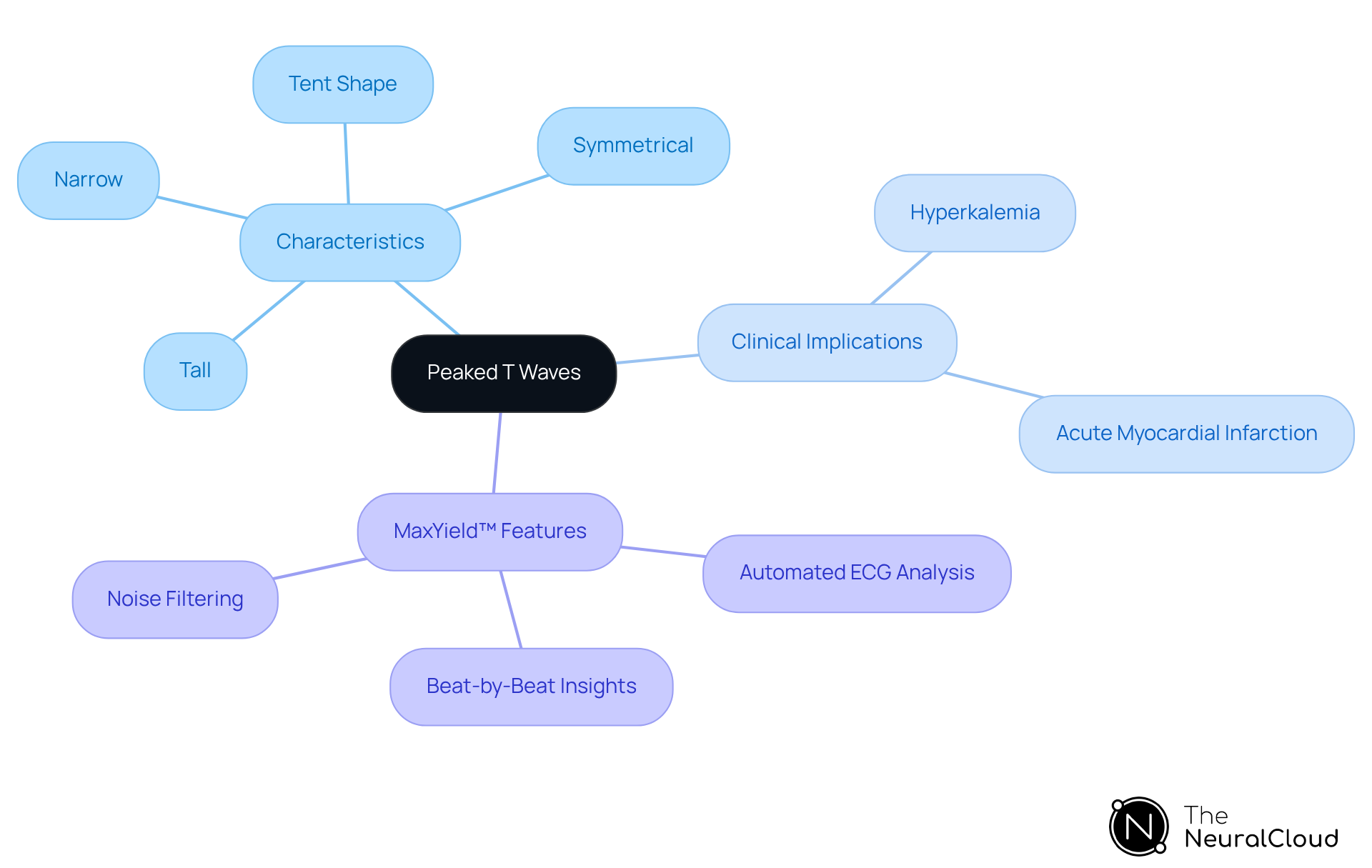
Peak T wave forms are characterized by their tall, narrow, and symmetrical appearance, often resembling a tent shape. These distinct oscillations emerge in patients, a condition frequently linked to hyperkalemia. Clinically, peaked T waves can be recognized by their height, which significantly exceeds that of normal T wave forms, and is associated with a peak T wave and a sharp apex. For health tech developers, understanding these defining characteristics is essential when designing tools to accurately identify peaked T waves, which can facilitate the early detection of cardiac issues or electrolyte imbalances. In cases of hyperkalemia, the T waves may progressively increase in height and sharpness, a change that can be quantitatively assessed using MaxYield™'s machine learning algorithms. This sophisticated approach not only improves the diagnostic process but also supports timely clinical interventions, ultimately enhancing patient outcomes.
MaxYield™, delivering beat-by-beat insights and advanced noise filtering capabilities. This ensures that even recordings with significant interference produce clear and actionable data. By focusing on these features, healthcare professionals can leverage MaxYield™ to improve diagnostic accuracy and patient care.
Identify Clinical Conditions Leading to Peaked T Waves
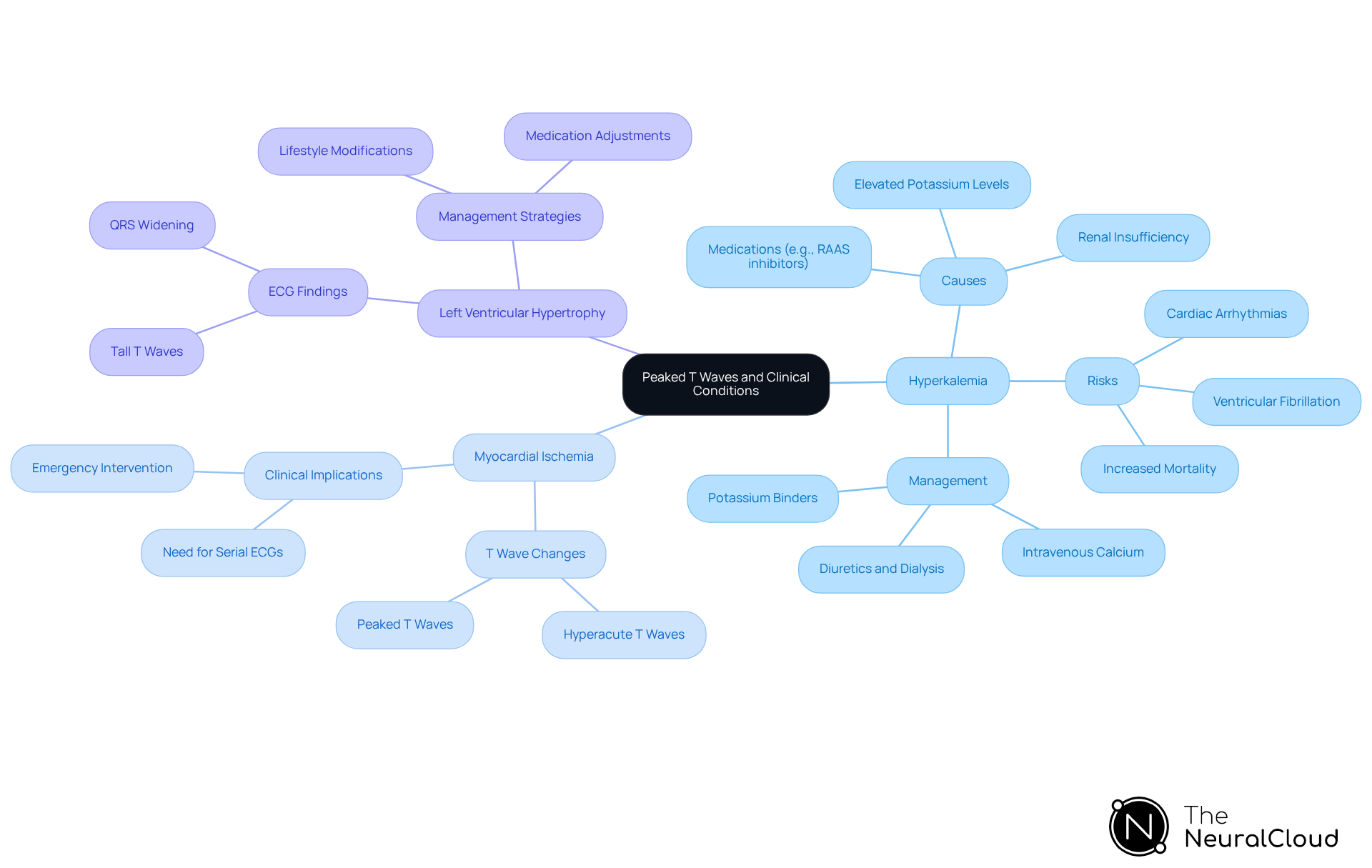
Peaked T waves, also known as peaked T waves, are often linked to various clinical conditions, particularly acute myocardial ischemia, early myocardial infarction, and hyperkalemia. Hyperkalemia, marked by elevated potassium levels, is a frequent cause of peaked T waves and poses significant cardiac risks if not promptly managed. These peak T wave forms are especially noticeable in precordial leads (V2-V4), appearing unusually tall (over 10 mm in these leads) and sharp in shape.
In addition to hyperkalemia, other conditions can also show T wave changes that indicate ischemic events. It’s essential for developers to integrate these changes into ECG assessment tools. This integration allows for the identification of peaked T waves alongside related clinical conditions. For instance, algorithms can be crafted to detect patterns typical of acute myocardial ischemia, alerting healthcare providers to the need for further evaluation or intervention.
Given that prevalence among cardiac patients can vary from 7% to 39%, recognizing these patterns is vital for timely and effective patient care. Continuous monitoring and analysis of ECG data, coupled with repeated laboratory tests, can greatly enhance clinical decision-making, ultimately leading to improved patient outcomes.
MaxYield™ offers advanced analytics, ensuring that critical data is accurately identified and labeled, even in recordings affected by high levels of noise and artifact. Identifying elevated peak T waves is crucial, as they may indicate a potentially life-threatening condition. Management involves addressing the underlying cause, particularly in cases of hyperkalemia.
Understand Mechanisms Behind Peaked T Waves
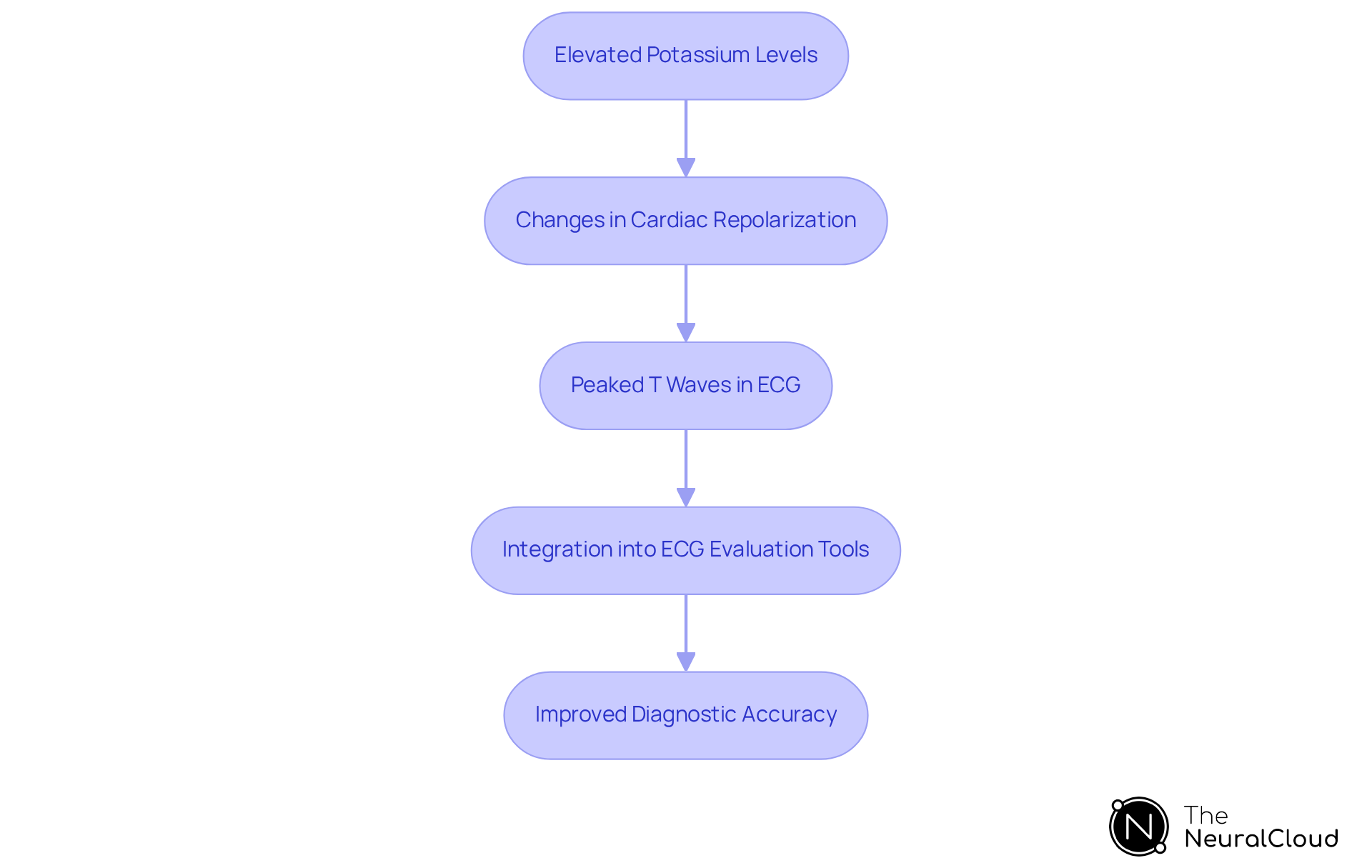
are primarily influenced by potassium levels, particularly due to fluctuations in extracellular fluid. Elevated potassium concentrations significantly affect the action potential duration and the repolarization process in cardiac myocytes, leading to the characteristic tall and narrow T waves. This phenomenon is especially pronounced in cases of hyperkalemia, where exceeding 8.0 mmol/L can result in a cardiac emergency, indicating severe hyperkalemia.
For health tech developers, integrating this physiological insight into product design is crucial. The technology from Neural Cloud Solutions provides real-time monitoring, effectively reducing noise while delivering beat-by-beat analysis of 200,000 heartbeats in under 5 minutes. This capability allows developers to create algorithms that analyze T wave morphology in conjunction with ECG findings, offering a more nuanced understanding of a patient's cardiac health.
Such integration not only aids in detecting abnormalities but also supports the identification of potential underlying causes, enhancing the overall diagnostic capability of ECG systems. As experts note, "early recognition is key," highlighting the importance of recognizing this condition in clinical practice. By leveraging the features of MaxYield™, healthcare professionals can improve their diagnostic accuracy and patient outcomes.
Conclusion
Understanding the complexities of peaked T waves is crucial for health tech developers who want to improve ECG analysis. By recognizing the importance of T wave morphology, particularly the differences between normal and peaked forms, developers can create algorithms that better assist healthcare professionals in diagnosing critical conditions. This knowledge not only helps in spotting abnormalities but also significantly contributes to better patient outcomes.
The article explores the features of normal and peaked T waves, highlighting their clinical significance and the physiological processes that lead to their formation. Key insights include the need to identify peaked T waves as signs of conditions like hyperkalemia and myocardial ischemia. Additionally, the MaxYield™ platform showcases how cutting-edge technology can enhance ECG analysis, providing features that boost accuracy and reliability.
Integrating these insights into health technology is essential. As the incidence of conditions associated with peaked T waves continues to present challenges in clinical environments, developers are urged to utilize this knowledge. By doing so, they can help advance diagnostic tools that not only enhance the precision of ECG interpretations but also enable timely interventions, ultimately improving the quality of patient care.
Frequently Asked Questions
What characterizes normal T wave morphology on an ECG?
Normal T waves are typically smooth and rounded, representing the repolarization of the ventricles. They are usually upright in leads I, II, and V3-V6, and inverted in lead aVR, with amplitudes generally under 5 mm in limb leads and under 10 mm in precordial leads.
What is the significance of understanding T wave characteristics for developers?
Understanding T wave characteristics is crucial for developers creating algorithms to accurately differentiate between normal and abnormal T patterns, allowing them to set benchmarks for ECG evaluation tools.
How can T wave morphology be quantified?
T wave morphology can be quantified using parameters such as amplitude and duration, which help in identifying irregularities like peak T waves.
What factors can influence T wave morphology?
Physiological variabilities such as age, sex, and health conditions can significantly influence T wave morphology, necessitating their incorporation into ECG analysis algorithms.
What is the MaxYield™ platform, and how does it enhance ECG analysis?
The MaxYield™ platform from Neural Cloud Solutions enhances ECG analysis by providing advanced noise reduction features to improve accuracy and a continuous learning model that adapts over time, leading to better diagnostic outcomes.
What are the key features of the MaxYield™ platform?
Key features include advanced noise reduction for enhanced signal clarity and tools for addressing physiological variability in ECG readings.
What advantages does the MaxYield™ platform offer to healthcare professionals?
The platform offers improved accuracy in ECG analysis, enhanced ability to identify irregularities, and better diagnostic outcomes through reliable interpretations.
List of Sources
- Explore Characteristics of Peaked T Waves
- Hyperacute T waves and Occlusion MI | ECG Cases| Emergency Medicine Cases (https://emergencymedicinecases.com/hyperacute-t-waves-occlusion-mi)
- pmc.ncbi.nlm.nih.gov (https://pmc.ncbi.nlm.nih.gov/articles/PMC6932546)
- Mortality Risk After Acute Severe Hyperkalemia | Docwire News (https://docwirenews.com/post/mortality-risk-after-acute-severe-hyperkalemia)
- Hyperkalemia ECG Changes: Peaked T Waves (https://powerfulmedical.com/blog/hyperkalemia-ecg-critical-changes)
- Study IDs Predictors of Emergency Hyperkalemia in HD Population (https://renalandurologynews.com/news/predictors-of-hyperkalemia-warranting-emergency-dept-transport-dialysis)
- Identify Clinical Conditions Leading to Peaked T Waves
- Why T Waves Peak in Hyperkalemia (https://ecglectures.com/blog/peaked-t-waves-in-hyperkalemia)
- Impending Danger: Evolution of Hyperacute T Waves to Cardiac Arrest (https://cureus.com/articles/432103-impending-danger-evolution-of-hyperacute-t-waves-to-cardiac-arrest)
- onlinelibrary.wiley.com (https://onlinelibrary.wiley.com/doi/10.1002/ehf2.14661)
- jhops.org (https://jhops.org/peaked-t-waves)
- Understand Mechanisms Behind Peaked T Waves
- Why T Waves Peak in Hyperkalemia (https://ecglectures.com/blog/peaked-t-waves-in-hyperkalemia)
- Understanding Peaked T Waves (https://clinician.com/blogs/clinicians/understanding-peaked-t-waves)
- litfl.com (https://litfl.com/hyperkalaemia-ecg-library)
- EKG- Disorders of T Waves (https://cancertherapyadvisor.com/home/decision-support-in-medicine/hospital-medicine/ekg-disorders-of-t-waves)