Introduction
Understanding the complexities of ST-Elevation Myocardial Infarction (STEMI) is essential for health tech developers. Accurate identification on an ECG can significantly impact patient outcomes, making it a matter of life and death. As morbidity rates rise due to delayed treatment, the urgency for developers creating diagnostic tools in this area has never been greater. However, developers face challenges in translating intricate medical definitions and patterns into effective technology.
Exploring these challenges sheds light on the vital role of STEMI in cardiology and underscores the intersection of innovation and patient care. By addressing these issues, developers can enhance their understanding of how to create tools that improve ECG analysis and ultimately benefit healthcare professionals and patients alike.
Define STEMI: Key Concepts and Importance in Cardiology
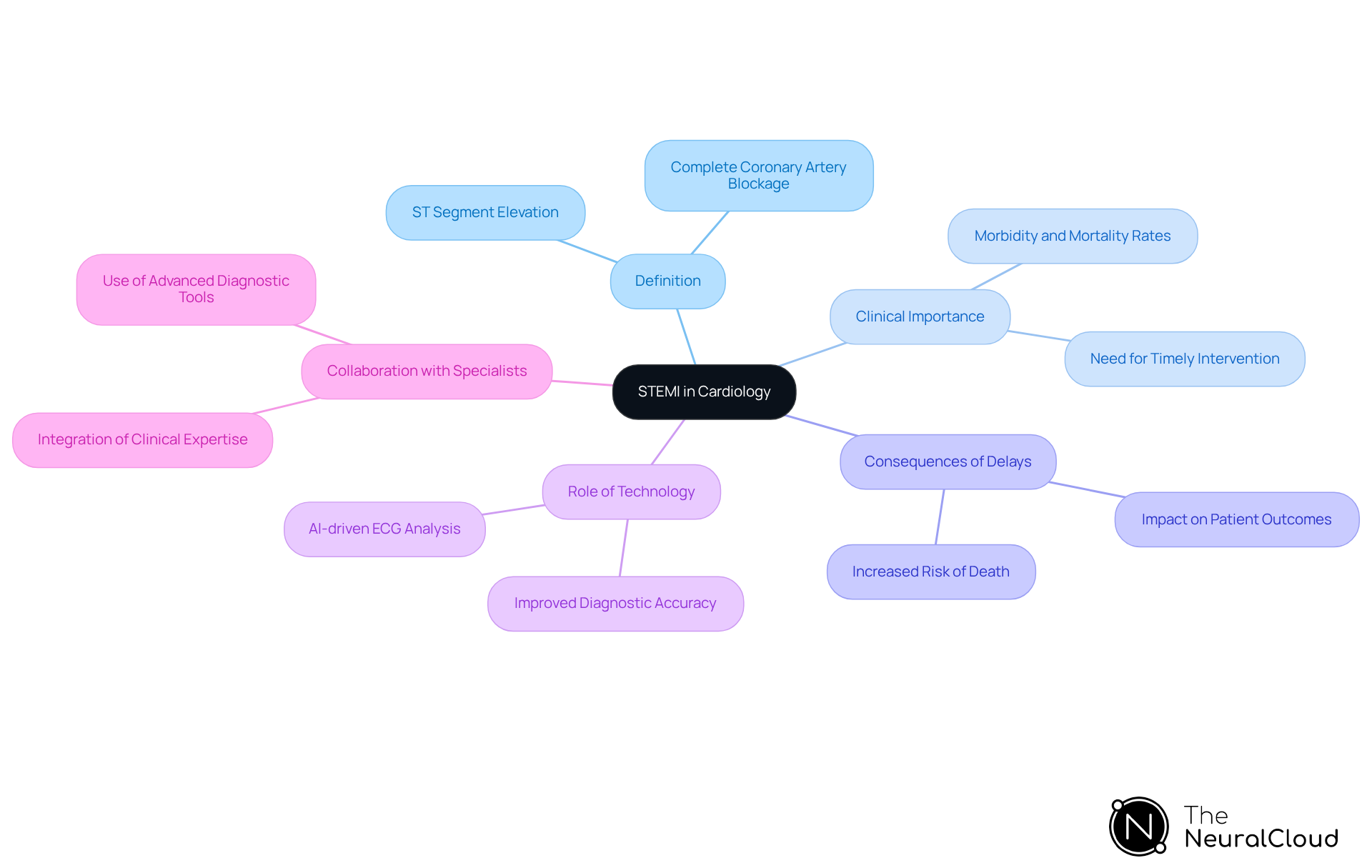
The definition of STEMI indicates a serious myocardial event, characterized by a significant rise in the ST segment. This elevation indicates a complete blockage of a coronary artery, leading to a halt in blood flow to the heart muscle. If not addressed promptly, this can result in irreversible damage. For health tech creators, grasping the complexities of this condition is vital, as it directly influences the design and functionality of diagnostic tools aimed at the management of this life-threatening issue.
Recognizing STEMI is critical due to its association with high mortality rates. Timely intervention, especially through procedures like percutaneous coronary intervention, can significantly improve patient outcomes. Delays in treatment exceeding 90 minutes can triple the risk of death, highlighting the urgent need for rapid diagnosis and intervention.
When developing solutions to enhance diagnostic accuracy and streamline workflows in healthcare settings, developers must consider the clinical implications of heart attacks. Recent advancements in medical technology have shown remarkable improvements in identifying cases related to the condition. For instance, one study found that an AI model accurately detected 553 confirmed STEMI cases, compared to 427 identified by traditional methods, while also reducing false positives from nearly 42% to about 8%. This illustrates the potential of technology to enhance diagnosis and improve management for patients.
Incorporating insights from cardiologists reveals that integrating technology with clinical practice can lead to better outcomes for patients. Specialists emphasize that optimal results occur when technology and clinical expertise work together, ensuring individuals receive timely and effective care. By recognizing the importance of collaboration and utilizing innovative technologies, health tech developers can play a significant role in advancing and improving patient survival rates.
Identify STEMI on ECG: Recognizing Key Patterns and Criteria
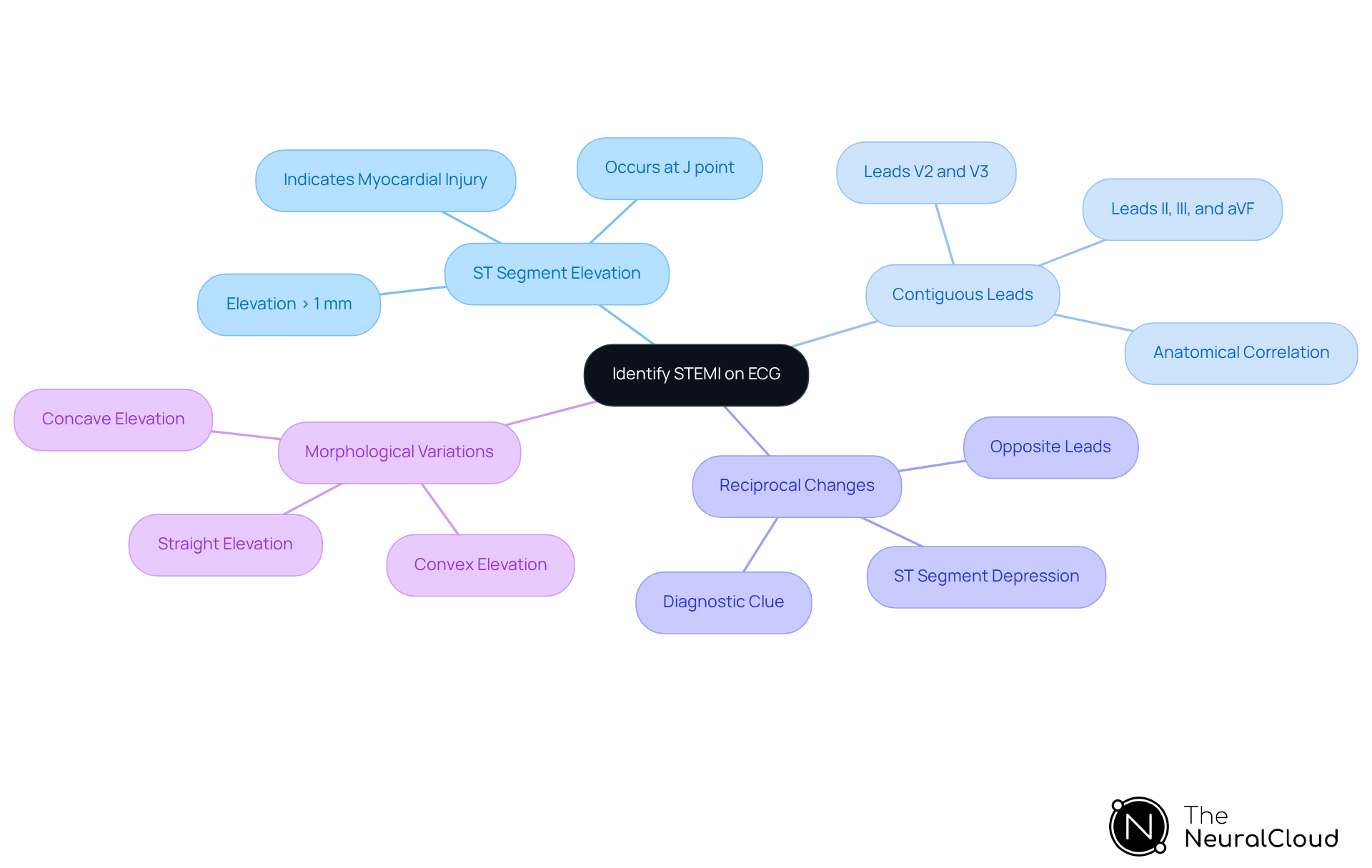
To effectively identify STEMI on an ECG, developers should focus on several essential patterns and criteria that enhance diagnostic accuracy:
- The primary indicator of STEMI is a rise in the ST segment exceeding 1 mm in two adjacent leads on a 12-lead ECG, typically occurring at the J point. This elevation signifies myocardial injury, which is crucial for understanding the condition.
- Observing specific leads, such as V2 and V3 or II, III, and aVF, is crucial. This pattern indicates that the affected area of the heart corresponds to the leads being analyzed, providing a clearer picture of the myocardial region involved, which is vital for accurate assessment.
- Reciprocal Changes: Developers should also consider changes in leads opposite to those exhibiting elevation. This phenomenon serves as an additional diagnostic clue, reinforcing the presence of a specific type of heart attack and enhancing the overall diagnostic process.
- The morphology of the ST elevation can vary, appearing concave, convex, or straight. Recognizing these variations is essential for the accurate development of diagnostic criteria, as they can significantly influence the interpretation of the ECG.
By integrating these standards into diagnostic tools, developers can greatly enhance healthcare professionals' ability to quickly and accurately recognize heart attacks, including understanding the implications, ultimately improving patient outcomes.
Diagnose STEMI: Testing and Evaluation Techniques
Diagnosing ST Elevation Myocardial Infarction (STEMI) presents several challenges that require a multifaceted approach. Key evaluation techniques are essential for accurate diagnosis and effective patient management.
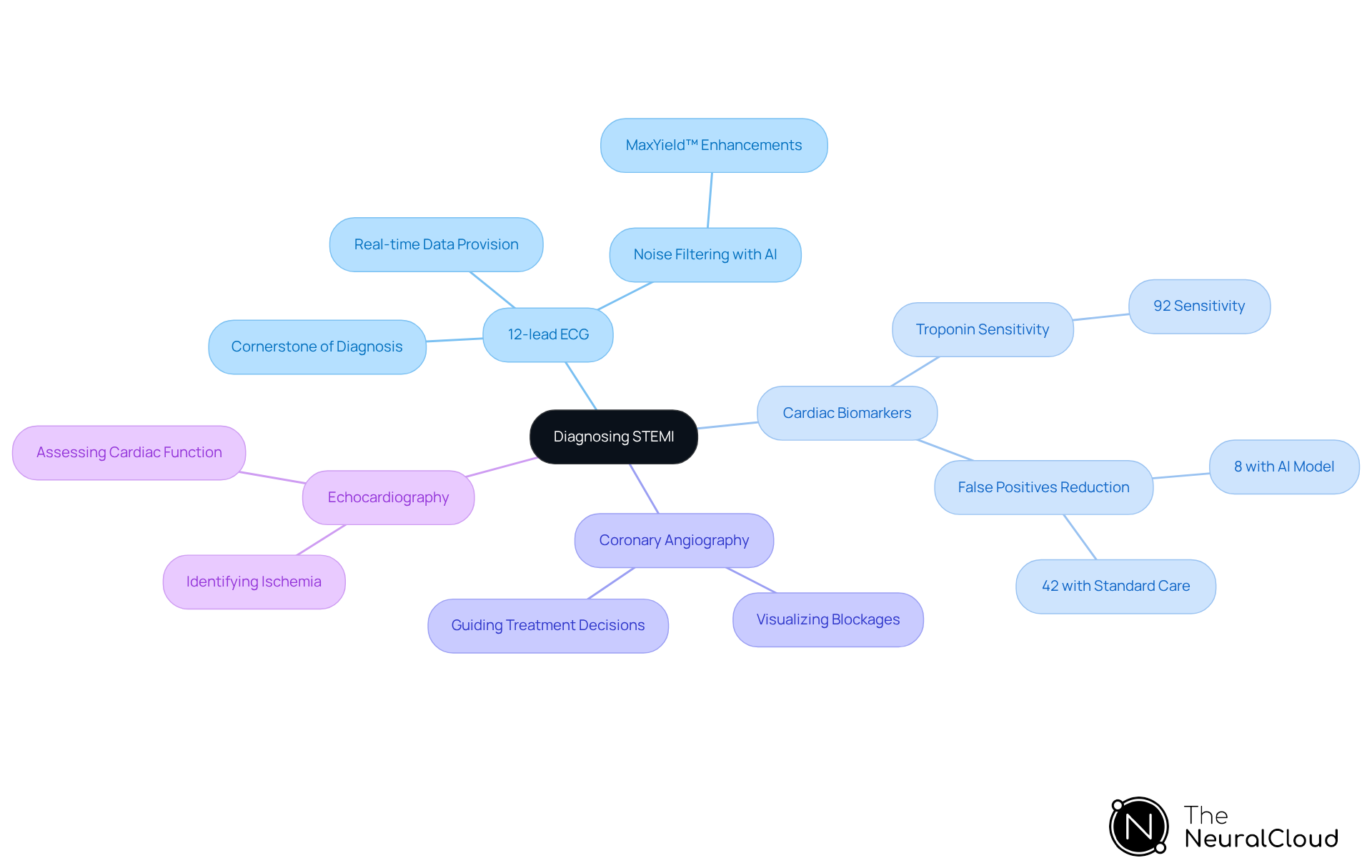
The 12-lead ECG serves as the cornerstone of diagnosing ST elevation myocardial infarction, which is part of the cardiac assessment. The 12-lead ECG captures the heart's electrical activity, which is essential for understanding the condition by allowing for the detection of abnormalities. With Neural Cloud Solutions' technology, the ability to filter noise and recognize distinct waves significantly enhances the accuracy of this critical diagnostic tool. Real-time data provision is vital, as timely diagnosis can greatly influence patient outcomes.
Blood tests that measure biomarkers, particularly troponin, are crucial for confirming myocardial injury. Elevated troponin levels are a strong indicator of cardiac muscle damage, supporting the diagnosis of myocardial infarction. Recent studies highlight the importance of these biomarkers, showing a sensitivity of 90%, compared to 71% for standard care. Moreover, the AI model has reduced false positives to about 8%, a significant improvement over the nearly 42% seen with standard triage, underscoring advancements in diagnostic accuracy.
Coronary angiography: This invasive procedure is often utilized after diagnosis to visualize coronary arteries and identify blockages. It provides essential information that guides treatment decisions, ensuring that interventions are effectively targeted.
Echocardiography: This imaging technique assesses cardiac function and can reveal areas of ischemia or infarction. By evaluating the heart's structure and function, echocardiography complements other diagnostic methods, offering a comprehensive view of an individual's cardiac health.
Incorporating these diagnostic methods into advanced platforms like Neural Cloud Solutions' can significantly enhance the precision and reliability of heart attack diagnoses. The platform's sophisticated algorithms and wave recognition capabilities streamline workflows and automate repetitive tasks, ultimately improving patient care. As noted by leading cardiologists, understanding the diagnostic process in conjunction with treatment protocols is vital for effective diagnosis and management of STEMI. For example, Timothy Henry, MD, pointed out that early intervention can reduce mortality by up to fourfold, thereby significantly decreasing time to treatment.
Manage STEMI: Treatment Protocols and Clinical Approaches
Effective management of STEMI involves several key treatment protocols and clinical approaches:
The primary goal in treating STEMI is to restore blood flow to the affected cardiac region as quickly as possible. This is typically achieved through percutaneous coronary intervention (PCI) or thrombolytic therapy, both of which significantly improve survival rates. Research indicates that reducing the initial medical contact-to-device time to under 60 minutes can lead to substantial reductions in mortality, particularly in individuals presenting with cardiogenic shock.
Utilizing technology, which rapidly labels P, QRS, and T Wave onsets and offsets, enhances the speed and accuracy of diagnosis. This facilitates quicker decision-making in critical situations, ultimately benefiting patient outcomes by improving treatment efficiency.
Medications
Patients often receive antiplatelet agents, such as aspirin and clopidogrel, to prevent further clotting. Additionally, beta-blockers, ACE inhibitors, and statins are frequently prescribed to manage and reduce the risk of future cardiovascular incidents. Current protocols emphasize the importance of administering these medications without delay, as timely intervention can significantly improve outcomes for individuals.
Continuous monitoring of vital signs and cardiac rhythm is essential during the acute treatment phase. Healthcare providers must be prepared to manage complications, such as arrhythmias or cardiac failure, which can arise during this critical period. The implementation of structured monitoring protocols has been linked to improved management of these complications. Advanced neural network models extract key features from ECG signals, providing actionable insights that support effective monitoring and management of individuals during treatment, which includes timely interventions.
Post-Discharge Care
After initial treatment, individuals require comprehensive follow-up care, including lifestyle modifications, cardiac rehabilitation, and regular check-ups to monitor heart health. Effective post-discharge strategies have been shown to enhance recovery and reduce the likelihood of readmission. By understanding these management protocols, developers can create tools that improve treatment planning and monitoring, ultimately leading to better clinical outcomes. As Dr. Kochan noted, strategies to reduce FMC-to-device times for patients with STEMI presenting with CS are essential for improving outcomes.

Conclusion
Understanding the definition of STEMI on ECG is crucial for health tech developers. This knowledge lays the groundwork for creating effective diagnostic tools that can save lives. By grasping the significance of ST segment elevation and its implications for myocardial injury, developers can contribute to advancements in emergency cardiovascular care, facilitating rapid identification and intervention in critical situations.
The article has explored essential concepts surrounding STEMI, including its definition, the importance of timely diagnosis, and the integration of advanced technologies like AI and sophisticated diagnostic platforms. Key insights highlighted critical patterns and criteria for recognizing STEMI on ECG, the challenges in diagnosis, and various techniques that enhance evaluation and management. Furthermore, it emphasized the need for collaboration between technology and clinical expertise to improve patient outcomes.
Ultimately, the role of health tech developers in understanding and applying the principles of STEMI diagnosis and management is significant. By leveraging innovative technologies and ensuring that diagnostic tools align with clinical needs, developers can greatly impact cardiac care. The urgency of effectively addressing STEMI underscores the importance of continuous improvement in diagnostic accuracy and treatment protocols, paving the way for better survival rates and enhanced quality of life for patients.
Frequently Asked Questions
What does STEMI stand for and what does it indicate on an ECG?
STEMI stands for ST-Elevation Myocardial Infarction. It indicates a serious myocardial event characterized by a significant rise in the ST segment, which signifies a complete blockage of a coronary artery and a halt in blood flow to the heart muscle.
Why is recognizing STEMI important?
Recognizing STEMI is critical due to its association with high morbidity and mortality rates. Timely intervention can significantly improve patient outcomes, as delays in treatment exceeding 90 minutes can triple the risk of death.
What intervention is commonly used for STEMI and how does it affect patient outcomes?
Percutaneous coronary intervention (PCI) is a common procedure used for STEMI. Timely PCI can significantly improve patient outcomes by restoring blood flow to the heart muscle.
How has AI impacted the identification of STEMI cases?
Recent advancements in AI-driven ECG analysis have improved the identification of STEMI cases. One study showed that an AI model accurately detected 553 confirmed STEMI cases compared to 427 identified by traditional methods, while also reducing false positives from nearly 42% to about 8%.
What role do health tech developers play in addressing STEMI?
Health tech developers can enhance diagnostic accuracy and streamline workflows in healthcare settings by incorporating advanced diagnostic tools and technologies. Their contributions can significantly improve the management of patients experiencing heart attacks.
How can integrating technology with clinical expertise improve patient care for STEMI?
Integrating advanced diagnostic tools, like MaxYield™, with clinical expertise can lead to better patient outcomes. Optimal results are achieved when technology and clinical knowledge work together to ensure timely and effective care for individuals experiencing heart issues.
List of Sources
- Define STEMI: Key Concepts and Importance in Cardiology
- AI-ECG Finds STEMI Faster, Cuts False-Positive Cath Lab Activations (https://tctmd.com/news/ai-ecg-finds-stemi-faster-cuts-false-positive-cath-lab-activations)
- healthcare-in-europe.com (https://healthcare-in-europe.com/en/news/ecg-ai-stemi-detection-heart-attack-emergency.html)
- AI-Based ECG Analysis Significantly Improves STEMI Detection, Reduces False Activations - American College of Cardiology (https://acc.org/latest-in-cardiology/articles/2025/10/24/16/56/tues-554pm-ai-tct-2025)
- New study finds AI model improves heart attack detection (https://health.ucdavis.edu/news/headlines/new-study-finds-ai-model-improves-heart-attack-detection/2025/11)
- pmc.ncbi.nlm.nih.gov (https://pmc.ncbi.nlm.nih.gov/articles/PMC12646341)
- Identify STEMI on ECG: Recognizing Key Patterns and Criteria
- AI-ECG Finds STEMI Faster, Cuts False-Positive Cath Lab Activations (https://tctmd.com/news/ai-ecg-finds-stemi-faster-cuts-false-positive-cath-lab-activations)
- healthcare-in-europe.com (https://healthcare-in-europe.com/en/news/ecg-ai-stemi-detection-heart-attack-emergency.html)
- AI-Based ECG Analysis Significantly Improves STEMI Detection, Reduces False Activations - American College of Cardiology (https://acc.org/latest-in-cardiology/articles/2025/10/24/16/56/tues-554pm-ai-tct-2025)
- Trends and Outcomes of ST‐Segment–Elevation Myocardial Infarction Among Young Women in the United States | Journal of the American Heart Association (https://ahajournals.org/doi/10.1161/JAHA.122.026811)
- New study finds AI model improves heart attack detection (https://health.ucdavis.edu/news/headlines/new-study-finds-ai-model-improves-heart-attack-detection/2025/11)
- Diagnose STEMI: Testing and Evaluation Techniques
- AI-ECG Finds STEMI Faster, Cuts False-Positive Cath Lab Activations (https://tctmd.com/news/ai-ecg-finds-stemi-faster-cuts-false-positive-cath-lab-activations)
- healthcare-in-europe.com (https://healthcare-in-europe.com/en/news/ecg-ai-stemi-detection-heart-attack-emergency.html)
- AI-based ECG model linked to reduction in false positives for heart attack (https://healio.com/news/cardiology/20251030/aibased-ecg-model-linked-to-reduction-in-false-positives-for-heart-attack)
- New study finds AI model improves heart attack detection (https://health.ucdavis.edu/news/headlines/new-study-finds-ai-model-improves-heart-attack-detection/2025/11)
- AI-Based ECG Analysis Significantly Improves STEMI Detection, Reduces False Activations - American College of Cardiology (https://acc.org/latest-in-cardiology/articles/2025/10/24/16/56/tues-554pm-ai-tct-2025)
- Manage STEMI: Treatment Protocols and Clinical Approaches
- ahajournals.org (https://ahajournals.org/doi/10.1161/CIRCINTERVENTIONS.122.012810)
- 2025 ACC/AHA/ACEP/NAEMSP/SCAI Guideline for the Management of Patients With Acute Coronary Syndromes (https://professional.heart.org/en/science-news/2025-guideline-for-the-management-of-patients-with-acute-coronary-syndromes)
- Improving STEMI Management Internationally: Initial Report of the American College of Cardiology-Global Heart Attack Treatment Initiative (https://jacc.org/doi/10.1016/j.jacadv.2024.101438)
- Contributing to Advancing STEMI Heart Attack Care | Minneapolis Heart Institute Foundation (https://mplsheart.org/news/contributing-advancing-stemi-heart-attack-care)