Introduction
Understanding the complexities of the P axis in ECG analysis is crucial for accurate cardiac assessments, especially in female patients. The P vector indicates the direction of electrical activity during heart depolarization and serves as a vital marker for identifying potential heart conditions. Variations in the P axis can pose unique challenges, prompting questions about their impact on diagnosis and treatment. By mastering the nuances of the P axis, healthcare professionals can gain valuable insights that enhance patient outcomes.
The MaxYield™ platform addresses these challenges by providing advanced tools for ECG analysis. It offers features that improve the accuracy of P axis interpretation, enabling healthcare providers to make informed decisions. The advantages of utilizing MaxYield™ include:
- Streamlined workflows
- Reduced diagnostic errors
- Improved patient care
Incorporating visual aids, such as diagrams or infographics, can further clarify complex information, making it easier for both technical and non-technical readers to grasp essential concepts. This approach not only enhances understanding but also fosters better communication among healthcare teams.
Define the P Axis and Its Importance in ECG Analysis
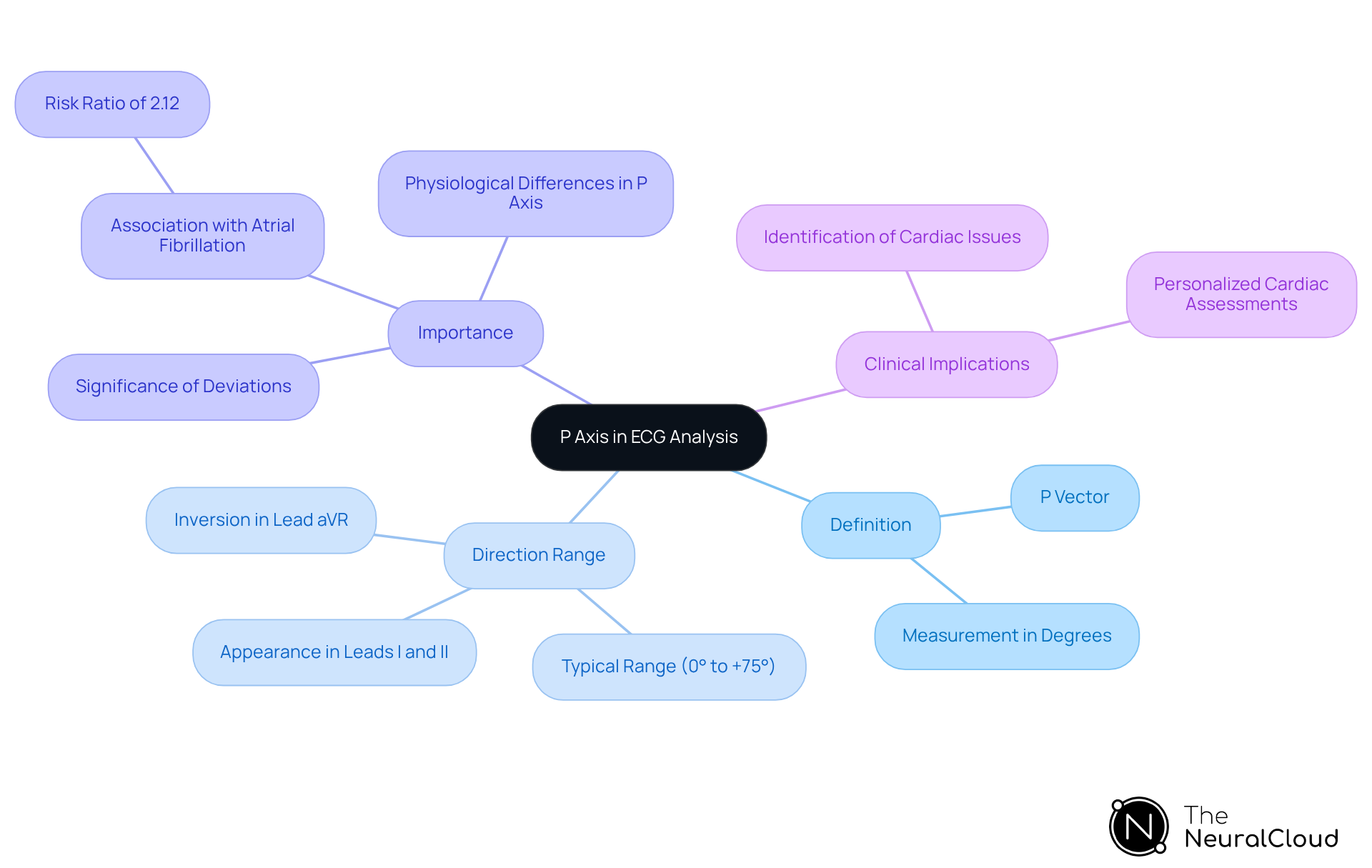
The P vector represents the direction of electrical activity during the P wave, typically measured in degrees on the frontal plane of the ECG. Generally, the P axis ranges from 0° to +75°, indicating that P components should appear upright in leads I and II, while being inverted in lead aVR. This aspect is crucial for ECG interpretation, as any deviations can point to underlying conditions, such as atrial enlargement or conduction irregularities.
For instance, an atypical P direction is associated with a significantly increased risk of atrial fibrillation (AF), with studies showing a combined risk ratio of 2.12 for its detection. In patients who are classified as having abnormal P wave morphology, this may reflect physiological differences, making this an important parameter for diagnosis. Understanding these nuances is vital for healthcare professionals, enabling them to effectively assess cardiac health.
Explore Characteristics of the P Axis in Female ECGs
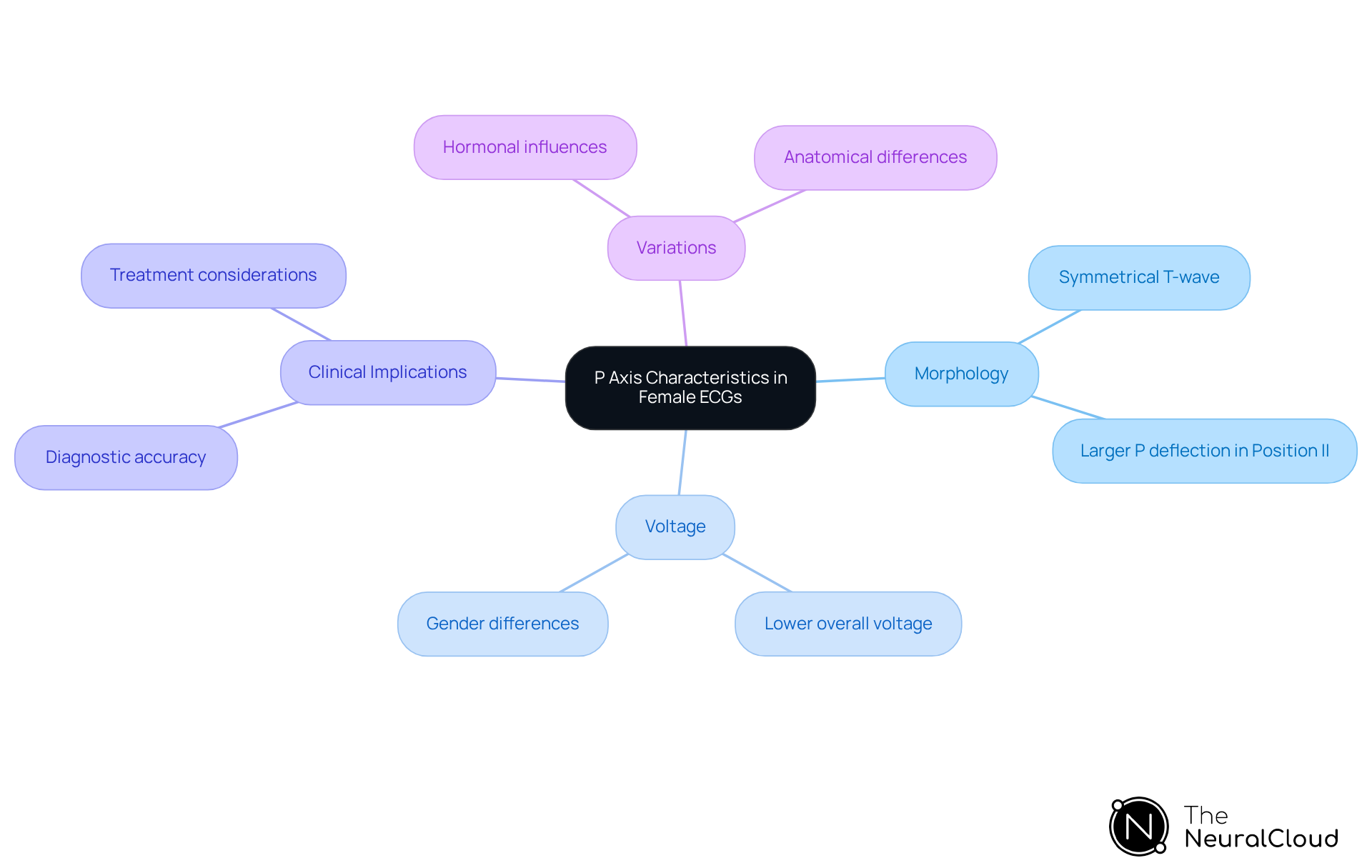
In female patients, the P Axis, which is vital for accurate ECG analysis. Research shows that women often have a more symmetrical T-wave and P morphology. The P Axis generally ranges from 0° to +75°, but variations can occur due to hormonal influences or anatomical differences. Notably, the P Axis is in position II, suggesting left atrial enlargement, a condition that is more prevalent among females. Understanding these nuances is crucial for healthcare providers, as misinterpreting P morphology can lead to diagnostic errors.
Moreover, studies indicate that the voltage of the P signal can differ significantly between genders, with females typically exhibiting lower voltage levels. This underscores the importance of gender-specific analysis, enabling healthcare professionals to make informed decisions based on ECG findings. By recognizing these differences, practitioners can enhance their diagnostic accuracy and improve patient outcomes.
Assess and Interpret the P Axis in ECG Readings
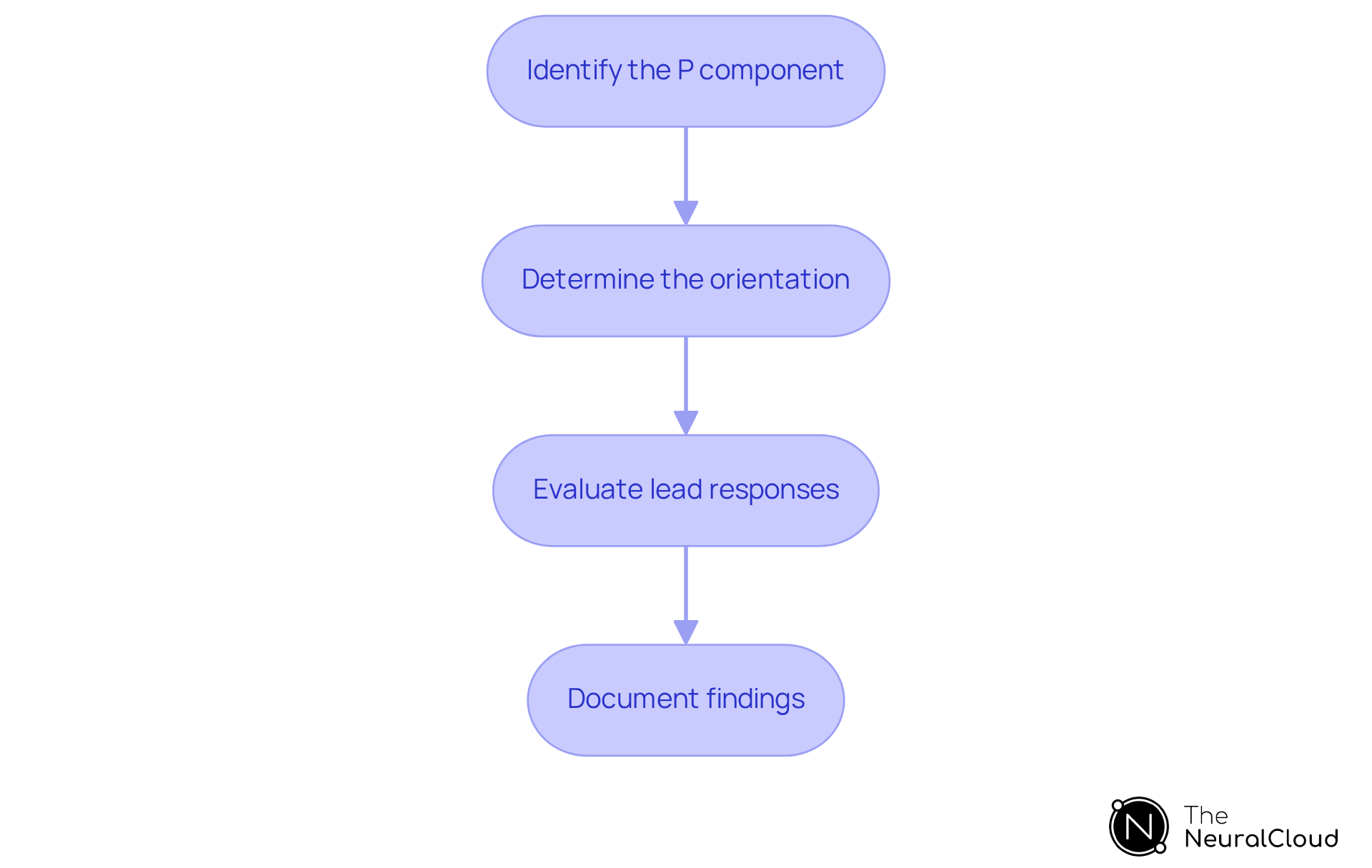
Evaluating the P line in ECG recordings can be challenging, particularly in leads I, II, and aVF. A positive P deflection in these leads typically indicates a normal atrial depolarization. To interpret the P line effectively, follow these steps:
- Identify the P component: Each P component should precede a QRS complex, confirming a normal rhythm. With advanced technology, the identification process is enhanced through digital tools, which allows for clearer visualization of P signals, even in difficult recordings.
- Determine the orientation: Assess the P deflection by calculating the net positive shift across the limb connections. A normal range is observed between 0° and +75°. The software adapts to each use, ensuring accurate measurements and improving over time.
- Evaluate lead responses: P deflections should be upright in leads I and II, while inverted in lead aVR. Any deviations may indicate atrial enlargement or other pathologies. The platform's advanced signal recognition capabilities help identify these deviations amidst physiological variability and signal artifacts.
- Document findings: Record the measurements and any irregularities for further analysis. This systematic approach, supported by clinical guidelines, enhances diagnostic accuracy and informs treatment strategies, ultimately transforming ECG analysis for healthcare professionals.
Identify Abnormalities in the P Axis and Their Clinical Implications
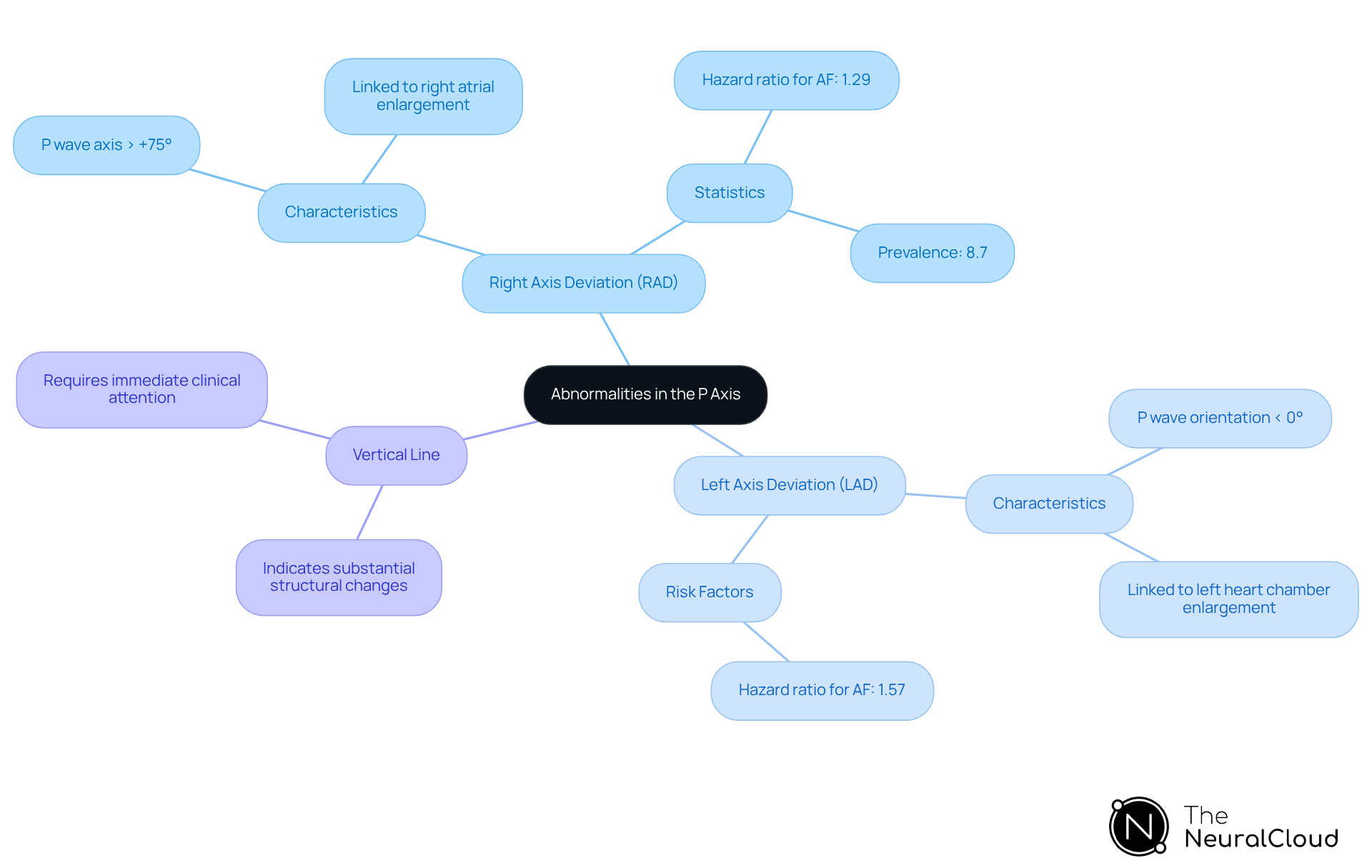
Abnormalities in the P axis can indicate various conditions, with two primary deviations of interest:
- RAD: This condition is characterized by a P wave orientation exceeding +75°, often linked to right atrial enlargement or pulmonary issues. Research shows that roughly 8.7% of individuals display right deviation, emphasizing its commonness in the general population. RAD can signify underlying structural changes, necessitating further investigation to assess potential impacts on cardiac function.
- LAD: Characterized by a P wave orientation of less than 0°, LAD may indicate left heart chamber enlargement or conduction issues. This deviation is linked to a history of atrial fibrillation, indicating a significant risk factor for this prevalent arrhythmia.
- Vertical Line: A line exceeding +90° can indicate substantial structural changes in the heart, often requiring immediate intervention.
Recognizing these abnormalities is crucial, as they can be predictive of serious conditions such as heart failure or stroke. Clinicians should correlate P axis findings with patient symptoms and other diagnostic results to formulate an effective treatment plan, ensuring comprehensive patient care.
Conclusion
Understanding the P axis in female ECG analysis is crucial for accurate cardiac assessment and effective patient management. The P vector indicates the direction of electrical activity during atrial depolarization, providing essential insights into heart health. Recognizing the normal range of the P axis, typically between 0° to +75°, enables healthcare professionals to identify deviations that may signal underlying conditions, such as atrial enlargement or an increased risk of atrial fibrillation.
This article highlights the distinct characteristics of the P axis in females, emphasizing the importance of gender-specific considerations in ECG interpretation. Variations in P wave morphology, voltage levels, and the significance of right and left axis deviations are thoroughly discussed. These insights underscore the necessity for practitioners to adopt a meticulous approach in evaluating the P axis, ensuring accurate diagnoses and tailored treatment strategies.
In conclusion, understanding the P axis has implications that extend beyond mere interpretation; it is vital for enhancing patient care and outcomes. By staying informed about the nuances of ECG analysis and embracing advanced tools for interpretation, healthcare professionals can significantly improve diagnostic accuracy. Integrating this knowledge into practice fosters better management of cardiac health and contributes to the overall well-being of patients.
Frequently Asked Questions
What does the P vector represent in ECG analysis?
The P vector represents the direction of electrical activity during the depolarization of heart chambers, typically measured in degrees on the frontal plane of the ECG.
What is the typical range for the P component direction?
The P component direction generally ranges from 0° to +75°.
How should the P components appear in different ECG leads?
P components should appear upright in leads I and II, while they should be inverted in lead aVR.
Why is the P axis important in ECG analysis?
The P axis is crucial for accurate ECG analysis as deviations can indicate underlying heart conditions, such as atrial enlargement or conduction irregularities.
What is the association between atypical P direction and atrial fibrillation (AF)?
An atypical P direction is associated with a significantly increased risk of atrial fibrillation (AF), with studies showing a combined risk ratio of 2.12 for its detection.
How can variations in the P component direction affect cardiac assessments?
In patients classified as normal P axis female, variations in the P component direction may reflect physiological differences, making it an important parameter for personalized cardiac assessments.
Why is understanding the P axis nuances important for healthcare professionals?
Understanding these nuances is vital for healthcare professionals as it enables them to effectively identify and manage potential cardiac issues.
List of Sources
- Define the P Axis and Its Importance in ECG Analysis
- sciencedirect.com (https://sciencedirect.com/science/article/pii/S0972629216313390)
- pmc.ncbi.nlm.nih.gov (https://pmc.ncbi.nlm.nih.gov/articles/PMC9714955)
- ahajournals.org (https://ahajournals.org/doi/10.1161/CIRCEP.121.010435)
- Explore Characteristics of the P Axis in Female ECGs
- pmc.ncbi.nlm.nih.gov (https://pmc.ncbi.nlm.nih.gov/articles/PMC2760216)
- journals.lww.com (https://journals.lww.com/cdrp/fulltext/2024/03001/case_studies.3.aspx)
- Identify Abnormalities in the P Axis and Their Clinical Implications
- pmc.ncbi.nlm.nih.gov (https://pmc.ncbi.nlm.nih.gov/articles/PMC12099609)
- pmc.ncbi.nlm.nih.gov (https://pmc.ncbi.nlm.nih.gov/articles/PMC7311287)
- ahajournals.org (https://ahajournals.org/doi/10.1161/CIRCEP.121.010435)
- ahajournals.org (https://ahajournals.org/doi/10.1161/JAHA.125.043590)