Introduction
Understanding the complexities of arrhythmia is essential, particularly since this condition impacts millions and can result in serious health issues like strokes. For developers of ECG technology, grasping how arrhythmias appear on an electrocardiogram is not merely advantageous - it's vital for improving diagnostic accuracy and patient outcomes. Yet, a significant challenge persists: how can one accurately interpret the intricate patterns of irregular heartbeats amidst noise and artifacts? This article examines the characteristics of arrhythmias on ECGs and investigates innovative solutions that aim to transform their analysis.
Define Arrhythmia: Understanding the Condition
Arrhythmia refers to any irregularity in the heart's rhythm, which can manifest as tachycardia (rapid heartbeat), bradycardia (slow heartbeat), or erratic rhythms. These irregularities arise from disruptions in the heart's electrical system, which controls the heartbeat. For developers of ECG technology, grasping the nuances of heart rhythm disorders is essential. Accurate detection and classification of these rhythms are crucial for patient safety. Symptoms may include palpitations, dizziness, and fainting, and if left untreated, arrhythmias can lead to complications, such as an increased risk of stroke.
Atrial fibrillation (AFib), the most common type of arrhythmia, accounts for approximately 1 in 7 strokes. Strokes resulting from AFib complications tend to be more severe than those caused by other factors. Recent studies show that the incidence of AFib is on the rise, with an estimated 12.1 million people in the US expected to be affected by 2030. This underscores the importance of accurately diagnosing AFib, which is a fundamental skill for healthcare professionals.
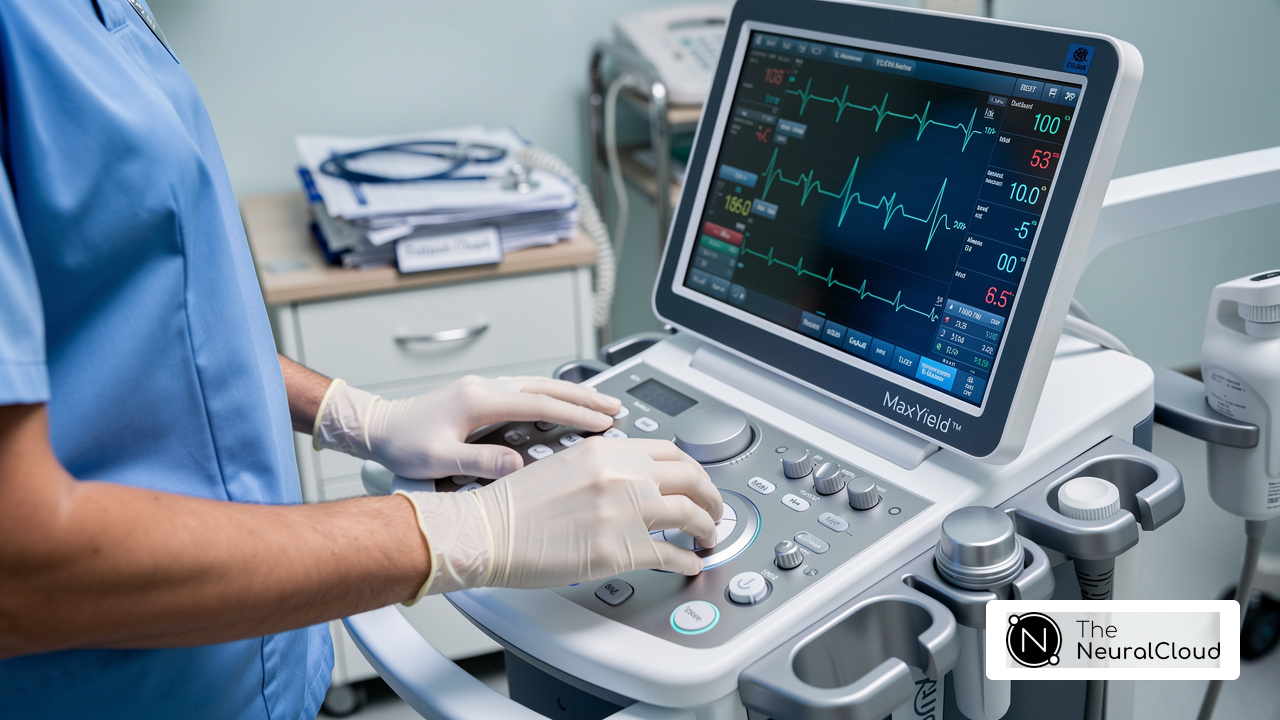
Developers are utilizing advanced AI technology to automate the process. This platform effectively tackles issues like noise and physiological variability, enhancing the accuracy of ECG readings. Its continuous learning model ensures that the algorithm improves with each use, boosting both accuracy and efficiency over time. This capability is vital for the precise identification of cardiac events.
Features of MaxYield™:
- User-friendly interface.
- Continuous learning model that evolves with usage.
- Enhanced accuracy in detecting arrhythmias.
Advantages for Healthcare Professionals:
- Improved diagnostic capabilities.
- Better patient outcomes through timely intervention.
- Streamlined workflow, allowing for more efficient patient management.
In summary, MaxYield™ not only simplifies ECG analysis but also significantly enhances the ability of healthcare professionals to manage arrhythmias effectively.

Significance of ECG in Diagnosing Arrhythmias
Electrocardiograms (ECGs) play a crucial role in diagnosing irregular heartbeats, helping to illustrate through a detailed visual representation of the heart's electrical activity. However, traditional methods can be challenging due to the complexity of interpreting electrical signals. This is where advancements in technology, particularly artificial intelligence, come into play.
The technology enhances diagnosis by utilizing advanced algorithms that capture the timing and strength of electrical signals with remarkable precision. These algorithms can analyze ECG data, such as heart rate variability, with accuracies exceeding 99% in controlled datasets. This level of accuracy is vital for timely intervention and treatment, ensuring that healthcare providers can act swiftly when necessary.
One of the key advantages of the technology is its ability to streamline diagnosis. By integrating AI technology, it allows clinicians to make informed decisions based on precise cardiac insights. This not only improves diagnostic accuracy but also enhances clinical outcomes for patients.
As the demand for effective arrhythmia detection continues to grow, it becomes increasingly important to understand these technological advancements. The field exemplifies how these innovations can transform patient care, ultimately benefiting both healthcare providers and patients alike.

Types of Arrhythmias and Their ECG Characteristics
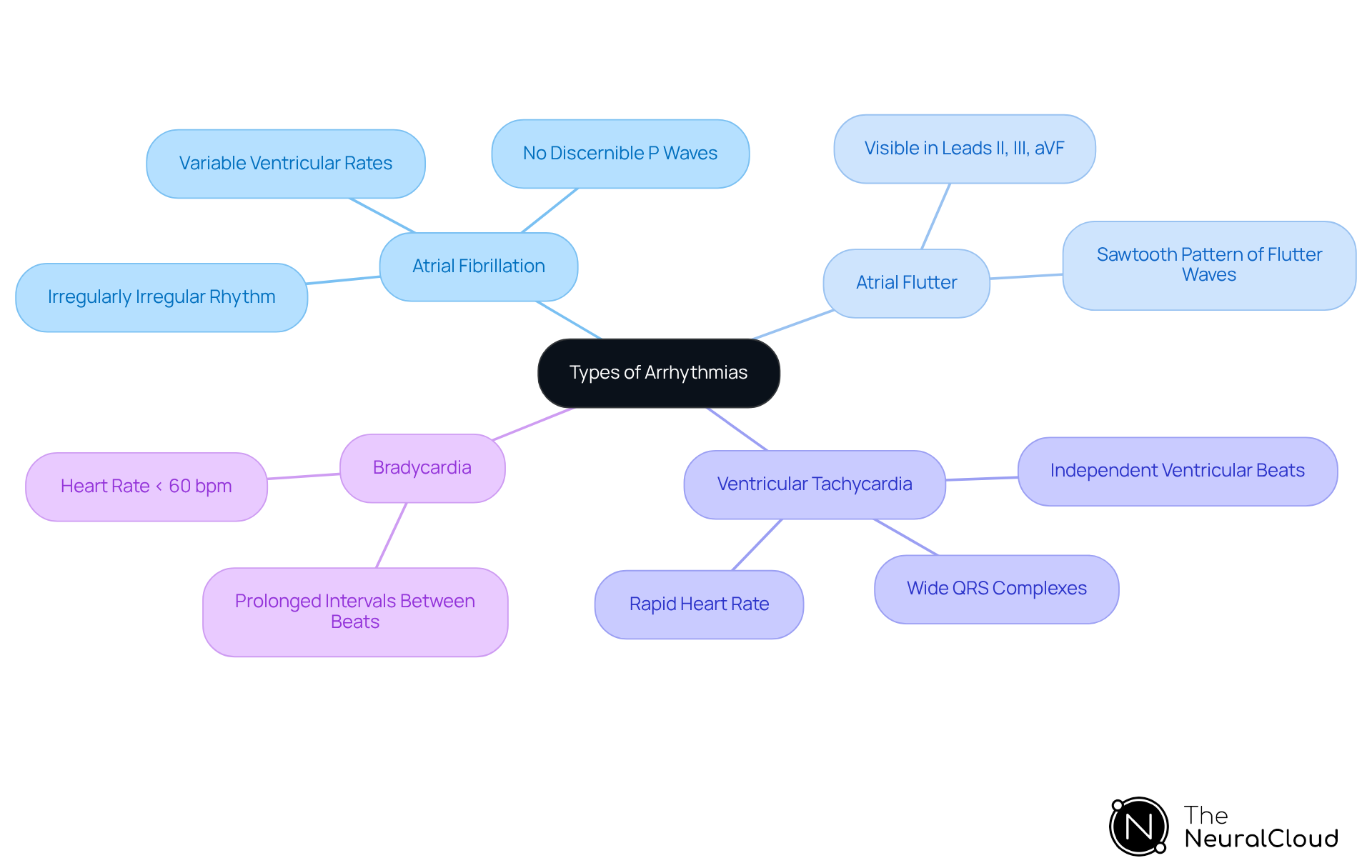
Arrhythmias can be classified into several categories, and understanding these categories is essential for identifying their distinct characteristics. Understanding these variations is crucial for developers aiming to improve ECG analysis, as each type requires specific algorithms for accurate detection and classification. Common types include:
- Atrial Fibrillation: This type is characterized by an irregularly irregular rhythm with no discernible P waves and variable ventricular rates. The advanced noise reduction features of the system clarify these irregularities, ensuring accurate detection even in noisy recordings.
- Atrial Flutter: Often presents as a 'sawtooth' pattern of flutter waves, particularly visible in leads II, III, and aVF. The capabilities of the MaxYield™ system enhance the identification of these patterns, improving diagnostic yield.
- Ventricular Tachycardia: Identified by a rapid heart rate with wide QRS complexes, indicating that the ventricles beat independently of the atria. The system's continuous learning model enables the algorithm to adjust and enhance precision over time, addressing physiological variability in ECG evaluation.
- Bradycardia: Defined as a heart rate of less than 60 beats per minute, which illustrates as prolonged intervals between beats. Leveraging the system's capabilities, developers can automate the analysis of such conditions, reducing manual workload and enhancing efficiency.
The system's innovative AI-driven automation provides the tools necessary to tackle these challenges effectively, ultimately benefiting healthcare professionals by improving the accuracy and efficiency of ECG analysis.
Challenges in ECG Interpretation of Arrhythmias
Interpreting ECGs for arrhythmia presents significant challenges, primarily due to various factors. Factors such as patient movement, electrical interference, and improper lead placement can obscure true cardiac signals, leading to diagnostic errors. For instance, research indicates that motion artifacts can severely impact ECG integrity, complicating the identification of arrhythmias, especially in patients with multiple coexisting conditions. The positive predictive value of ECG for sinus rhythm stands at 95%, but drops to only 53.5% for non-sinus rhythms, highlighting the potential for misinterpretation.
Recent advancements in technology are addressing these challenges. The platform from Neural Cloud Solutions utilizes sophisticated AI algorithms to filter out noise and enhance the clarity of ECG readings. This platform exemplifies how technology can improve diagnostics. It has demonstrated superior performance in detecting arrhythmias compared to traditional methods, achieving a higher sensitivity of 97.5% versus 86.7% in physician reporting. Additionally, innovative techniques, such as the WLNH method, effectively remove artifacts while preserving critical morphological information, showcasing the potential for enhanced ECG analysis.
By automating repetitive tasks and streamlining workflows, MaxYield™ not only addresses inefficiencies but also adapts to the physiological variability of patients. This ensures that healthcare professionals can rely on accurate and timely ECG interpretations. As developers create solutions that support these advanced tools, understanding ECG interpretation is essential for improving patient care.
Key Features of MaxYield™:
- Utilizes advanced AI algorithms for noise filtering.
- Enhances clarity of ECG readings.
- Superior sensitivity in detecting arrhythmias.
- Innovative techniques.
Advantages for Healthcare Professionals:
- Improved diagnostic accuracy.
- Reliable and timely ECG interpretations.
- Streamlined workflows and reduced inefficiencies.

Conclusion
Understanding arrhythmia and its representation on an electrocardiogram (ECG) is crucial for effective patient management and diagnosis. However, interpreting ECGs can be challenging due to various factors, including noise and physiological variability. This is where the MaxYield™ platform comes into play, leveraging advanced artificial intelligence to enhance ECG analysis.
Features of MaxYield™:
- AI-Powered Analysis: Utilizes cutting-edge technology to improve the accuracy of ECG readings.
- User-Friendly Interface: Designed for ease of use, allowing healthcare professionals to quickly interpret results.
- Real-Time Detection: Facilitates prompt identification of irregular heart rhythms, enabling timely interventions.
Advantages for Healthcare Professionals:
- Improved Diagnostic Accuracy: By addressing common challenges in ECG interpretation, MaxYield™ helps ensure more reliable results.
- Streamlined Workflows: The platform enhances efficiency, allowing providers to focus more on patient care rather than data analysis.
- Better Patient Outcomes: Ultimately, the use of advanced technology leads to improved management of arrhythmias, benefiting patient health.
As the prevalence of arrhythmias continues to rise, the need for effective ECG interpretation tools becomes increasingly urgent. Embracing innovations like MaxYield™ not only enhances diagnostic precision but also supports healthcare providers in delivering timely and reliable care. Staying informed about these advancements is essential for those dedicated to improving arrhythmia management and patient health.
Frequently Asked Questions
What is arrhythmia?
Arrhythmia refers to any irregularity in the heart's rhythm, which can manifest as tachycardia (rapid heartbeat), bradycardia (slow heartbeat), or erratic rhythms caused by disruptions in the heart's electrical system.
What are the symptoms of arrhythmia?
Symptoms may include palpitations, dizziness, and fainting. If left untreated, irregular heartbeats can lead to serious health complications, including an increased risk of stroke.
What is atrial fibrillation (AFib)?
Atrial fibrillation (AFib) is the most common type of irregular heartbeat, accounting for approximately 1 in 7 strokes. Strokes resulting from AFib complications tend to be more severe than those caused by other factors.
How prevalent is AFib?
Recent studies indicate that the incidence of AFib is on the rise, with an estimated 12.1 million people in the US expected to be affected by 2030.
Why is accurate detection of arrhythmia important?
Accurate detection and classification of arrhythmias are crucial for effective patient management and timely intervention, which can significantly improve patient outcomes.
How does MaxYield™ assist in ECG analysis?
MaxYield™ utilizes advanced AI technology to automate ECG analysis, effectively addressing challenges like noise and physiological variability, which enhances the accuracy of ECG readings.
What is the continuous learning model of MaxYield™?
The continuous learning model allows the algorithm to improve with each use, boosting both accuracy and efficiency over time for the precise identification of cardiac events.
What are the advantages of using MaxYield™ for healthcare professionals?
The advantages include improved diagnostic precision, better patient outcomes through timely intervention, and a streamlined workflow for more efficient patient management.
List of Sources
- Define Arrhythmia: Understanding the Condition
- b-secur.com (https://b-secur.com/blog/case-study-fourth-frontier)
- Frequency of Cardiac Rhythm Abnormalities in a Half Million Adults | Circulation: Arrhythmia and Electrophysiology (https://ahajournals.org/doi/10.1161/circep.118.006273)
- About Atrial Fibrillation (https://cdc.gov/heart-disease/about/atrial-fibrillation.html)
- irhythm2024rd.q4web.com (https://irhythm2024rd.q4web.com/news/news-details/2025/iRhythm-Unveils-New-Real-World-Data-at-ACC-25-Demonstrating-the-Benefits-of--Zio-Long-Term-Continuous-Monitoring-for-Arrhythmia-Detection/default.aspx)
- Memorable Cardiology Quotes | TheKnowHow Blog (https://theknowhow.ae/memorable-cardiology-quotes-heart)
- Significance of ECG in Diagnosing Arrhythmias
- Study Shows Promising Results for ECG Technology (https://dicardiology.com/content/study-shows-promising-results-ecg-technology)
- Electrocardiogram - StatPearls - NCBI Bookshelf (https://ncbi.nlm.nih.gov/books/NBK549803)
- AccurKardia wins FDA clearance for next-generation ECG analysis system | Medical Economics (https://medicaleconomics.com/view/accurkardia-wins-fda-clearance-for-next-generation-ecg-analysis-system)
- pmc.ncbi.nlm.nih.gov (https://pmc.ncbi.nlm.nih.gov/articles/PMC10145690)
- ECG Noise Filtering Improves Clinical Accuracy (https://emjreviews.com/interventional-cardiology/news/ecg-noise-filtering-improves-clinical-accuracy)
- Challenges in ECG Interpretation of Arrhythmias
- iieta.org (https://iieta.org/journals/mmep/paper/10.18280/mmep.110812)
- mdpi.com (https://mdpi.com/2673-3846/2/4/39)
- Artificial Intelligence–Assisted ECG Interpretation versus Conventional Reporting in Predicting Arrhythmias in Acute Coronary Syndrome: A Diagnostic Accuracy Study (https://healthcare-bulletin.co.uk/article/artificial-intelligence-assisted-ecg-interpretation-versus-conventional-reporting-in-predicting-arrhythmias-in-acute-coronary-syndrome-a-diagnostic-accuracy-study-4252)
- pmc.ncbi.nlm.nih.gov (https://pmc.ncbi.nlm.nih.gov/articles/PMC7357458)
- diagnosticimaging.com (https://diagnosticimaging.com/view/fda-new-electrocardiogram-suite-algorithms-and-analytics)